What Is the Best Thing to Put on Windows to Keep Heat Out in Dickinson?
Most of the heat that pours through a sunny window is infrared light you can't see, so the best fix is whatever stops that infrared at the glass.
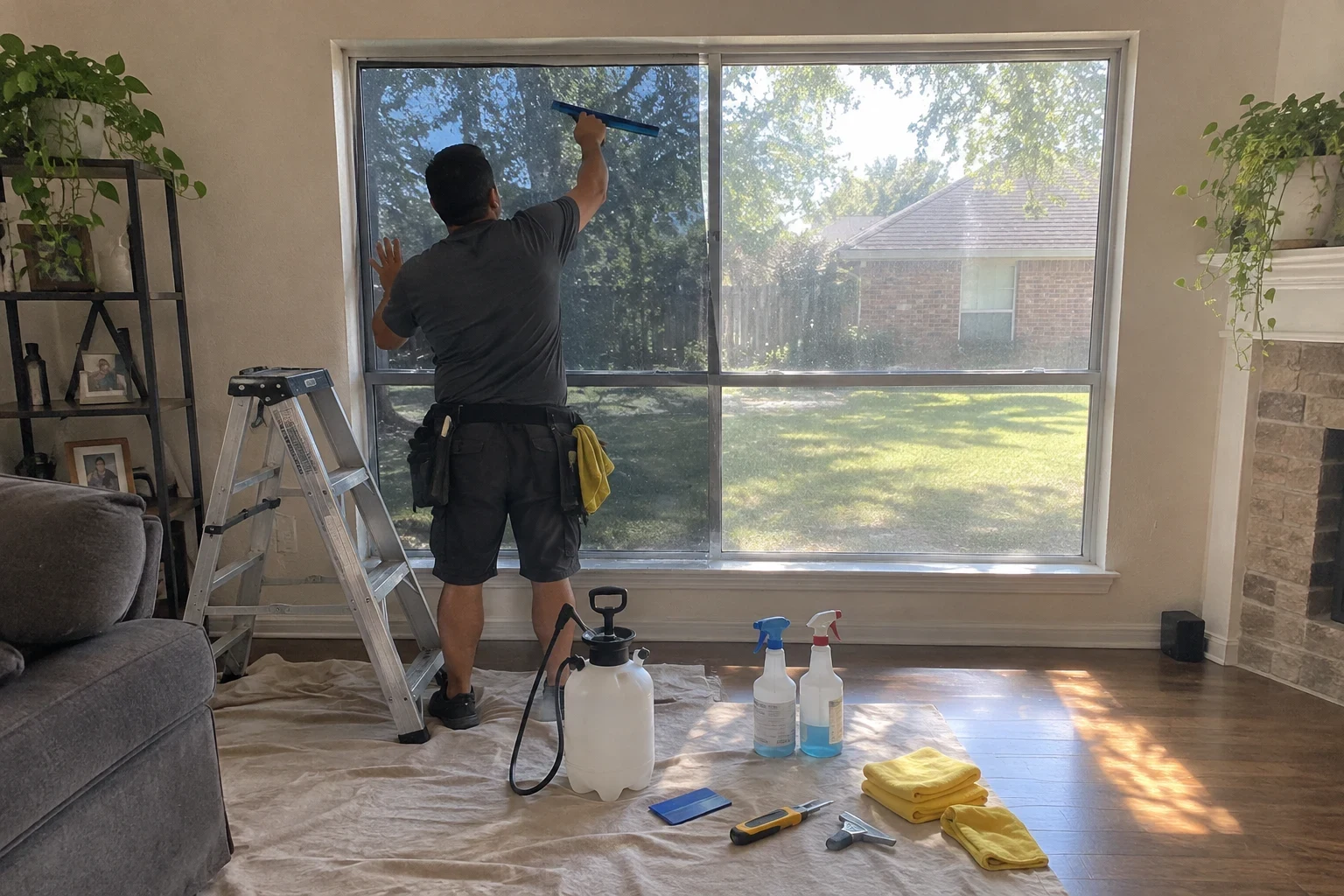
What is the best thing to put on windows to keep heat out?
For most homes, a spectrally selective ceramic window film is the best thing to put on windows to keep heat out. It blocks most infrared and UV while letting daylight through. Reflective film rejects even more heat but adds a mirrored look. Blinds help less because the heat is already inside. Free consultation: (281) 378-5740.
Why does heat get through a closed window?
Sunlight reaching your glass carries energy in three bands: ultraviolet, visible light and infrared. Infrared accounts for roughly half of that energy, and plain clear glass lets most of it pass straight into the room. Once it hits your floor, couch or countertop, it turns into heat that your air conditioner has to remove.
That is why a closed window on the west side of a house can still make a room feel like an oven by late afternoon. The glass itself warms up too, and it radiates that heat inward to anyone sitting nearby. On the Gulf Coast, where the cooling season runs long and the sun is strong for much of the year, those hours add up on the power bill.
Which window film keeps the most heat out?
Window films are rated by total solar energy rejected (TSER), which measures how much of the sun's full energy stays outside. A second number, visible light transmission (VLT), tells you how much daylight still gets in. The best heat-control film for a home is usually the one with a high TSER at a VLT you are happy to live with.
Ceramic film uses nano-scale ceramic particles that absorb and reject infrared while staying mostly clear to visible light. It does not contain metal, so it won't interfere with cell signal or Wi-Fi, and it does not corrode in humid coastal air. Reflective film uses a thin metalized layer that bounces solar energy back outward, which gives it the highest heat rejection per shade of darkness but also a mirror-like finish from outside.
- Ceramic film: strong infrared rejection, clear or lightly tinted look, no signal interference
- Reflective film: highest overall heat rejection, daytime privacy, visible mirrored exterior
- Non-reflective dyed or hybrid film: softer glare reduction, less heat rejection than ceramic
- All three: block about 99 percent of UV, which slows fading of floors and furniture
Are blinds, curtains or exterior screens better than film?
Interior blinds and curtains cut glare, but they sit behind the glass. By the time sunlight reaches them, the infrared has already passed into the room, and the fabric or slats heat up and release that heat inside. Light-colored, tightly closed blackout curtains help some, but you lose the view and the daylight to get it.
Exterior solar screens and awnings are genuinely effective because they stop the sun before it reaches the glass. The trade-offs are a darker, screened view, upkeep in salt and wind, and the fact that many homeowners don't want them on every elevation. Window film sits on the inside surface of the glass, keeps the view clear, and works on every pane without changing how the house looks from the street. Many people combine film on the hottest windows with the shades they already own.
How much does film actually help with comfort and cooling costs?
The biggest change most people notice is comfort near the glass. A room with a big west or south window stops having a hot zone in the afternoon, and the thermostat stops cycling as hard to make up for it. Because your air conditioner is removing less solar heat, it runs fewer and shorter cycles during the hottest part of the day.
How much that shows up on your bill depends on how much glass you have, which way it faces, whether trees or a porch already shade it, and how efficient your current windows are. A home with large unshaded west-facing windows usually sees the clearest difference. We look at those factors during a consultation and tell you which windows are worth filming and which ones are not.
Is window film safe on dual-pane and older glass?
Film that absorbs heat makes the glass itself warmer, and uneven heating can stress the glass. That is why film choice matters on dual-pane units, large fixed panes and tempered or laminated glass. Some window manufacturers also have rules about which films can be applied without affecting their own coverage.
Before recommending a product, we check the glass type, the size of each pane, and whether the seals on insulated units are intact. A failing seal shows up as fog between the panes, and film will not fix it. We match the film's absorption to the glass so you get the heat rejection without creating a cracking risk.
- Check for fogging or moisture between the panes before filming
- Large fixed panes in full sun need a lower-absorption film
- Tempered and laminated glass accept most films but still need matching
- Keep window manufacturer paperwork handy if you have it
Quick questions about keeping heat out
Will heat-control film make my rooms darker?
Not necessarily. Many ceramic films look nearly clear and still reject a large share of infrared, so you can cut heat without losing much daylight.
Does reflective film work at night?
Reflective film gives privacy in daylight when it is brighter outside. After dark, with lights on inside, people can see in, so you will still want blinds for nighttime privacy.
How long does film take to cure after installation?
The water used to apply the film has to dry out, which can take a few days to a few weeks depending on the film and the weather. Haziness or small water pockets during that time are normal and clear on their own.
How do I clean tinted windows?
Wait until the film has cured, then use a soft cloth or rubber squeegee with a mild, ammonia-free cleaner. Skip razor blades and abrasive pads on the filmed side.
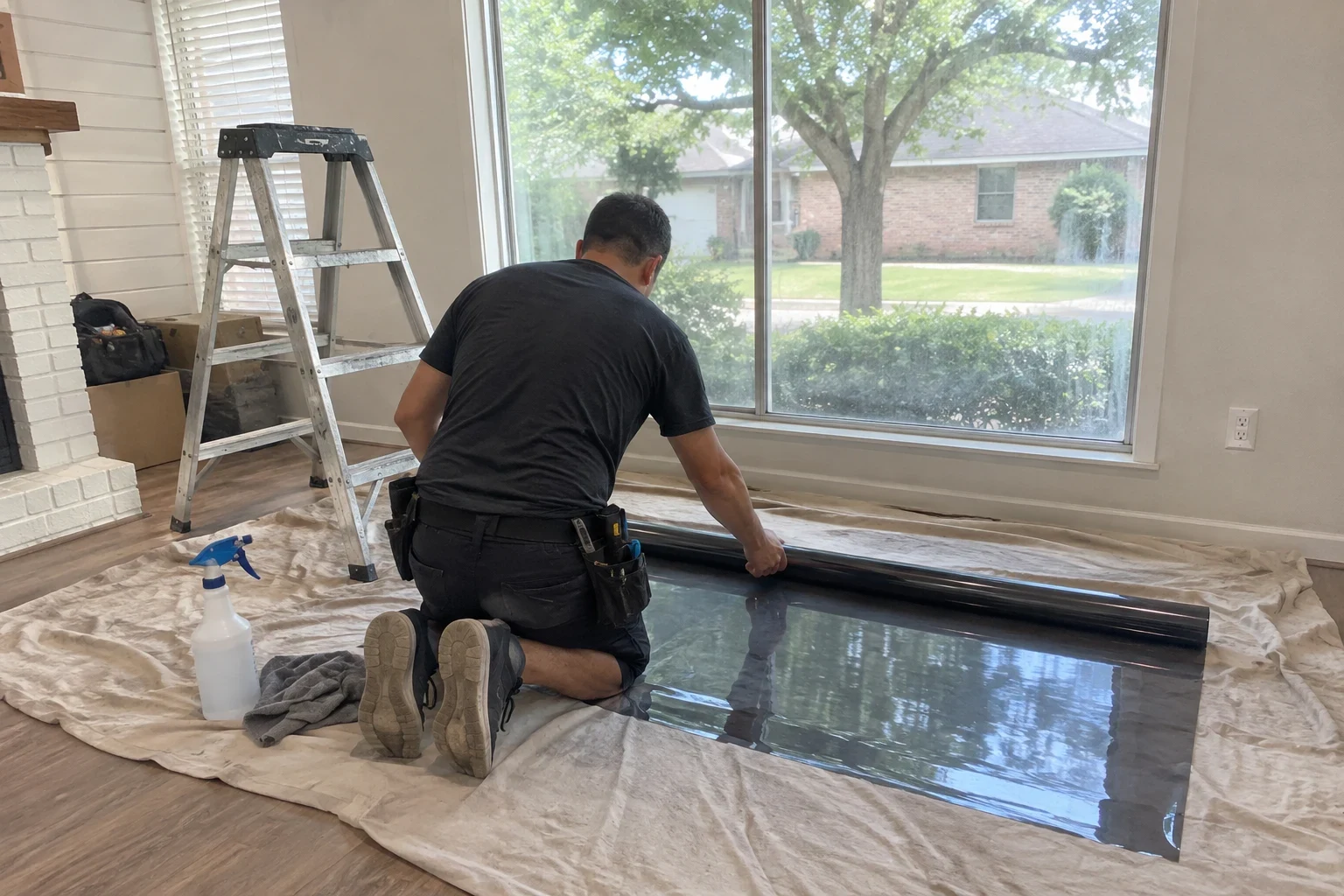
Find out which film fits your hottest windows
Call us and we will set up a free consultation. We look at your glass type, which windows take the most sun, and how you use each room, then explain whether ceramic, reflective or non-reflective film makes the most sense and give you a free quote by phone.