ServicesDecorative Window Tinting
Decorative Window Tinting in Dickinson
We install frosted, etched-look and patterned window film on bathroom windows, door sidelites, cabinet glass and interior partitions. You block the view through the glass, keep the daylight and skip the cost of replacing a sound window or door to change its look.
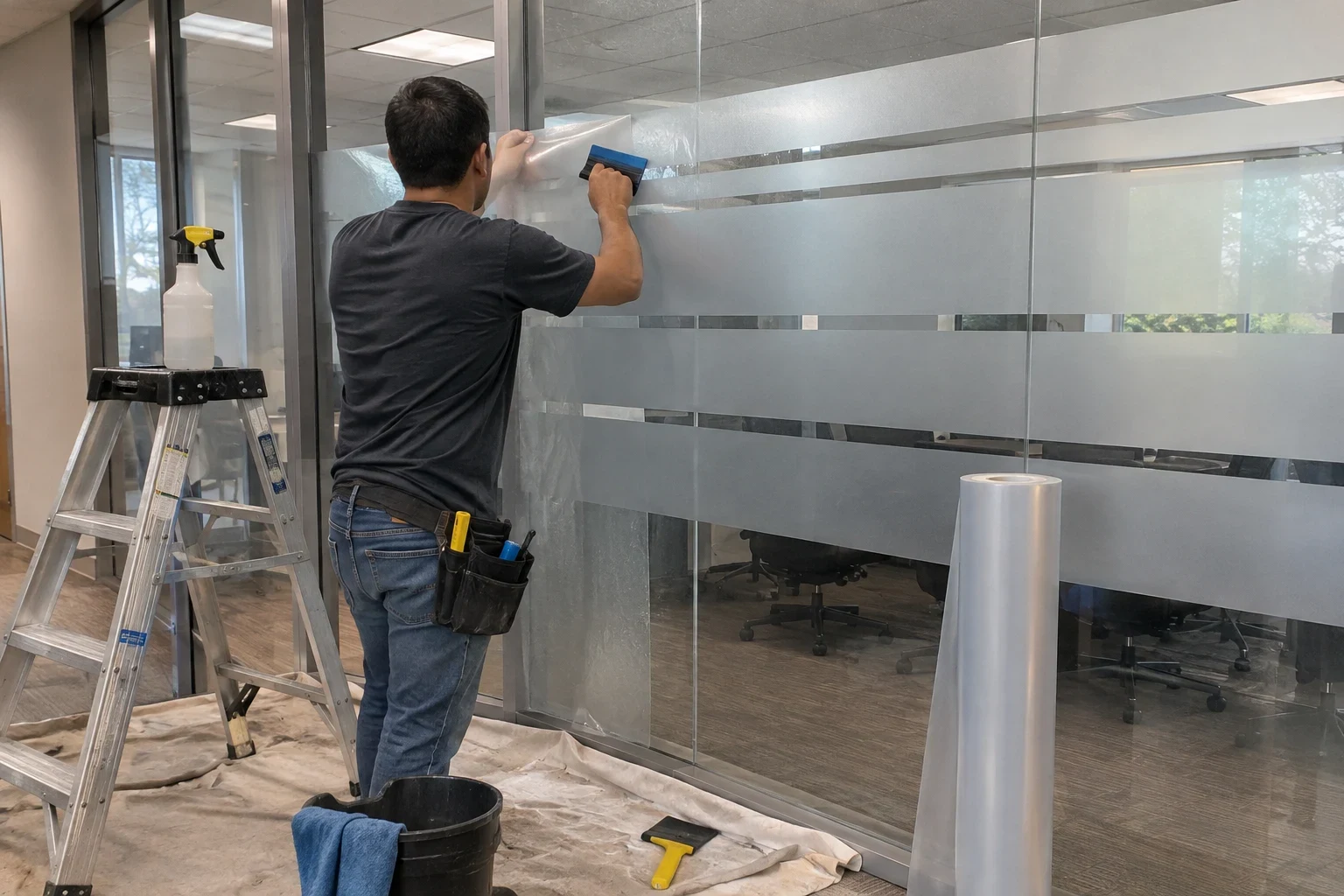
How Decorative Film Works and Where It Belongs
The product itself is a thin layer of polyester or vinyl, either printed, dusted or embossed, that bonds to the inside surface of the glass you already have. Frosted versions scatter light on its way through, so the room stays bright while anything on the far side turns to soft blur. Patterned versions apply that same effect as stripes, gradients, borders or an etched-glass finish, with some areas left clear by design.
Choose it when the pane is in good shape and the real issue is the view through it. Typical jobs include a bathroom window looking onto the neighbor's driveway, clear sidelites flanking a front door, a glass shower partition or a glass-walled conference room in an office. Since daylight still gets in, plenty of customers stop closing the blinds and switching on lamps during the day, which trims lighting use in a small but genuine way.
Heat control is not its main purpose. When a room gets hot every afternoon, we say so plainly and suggest ceramic window film on those sun-facing panes, leaving decorative film to cover the privacy glass.
What the Work Includes
Samples held to your glass
We bring swatches of frosted, gradient and patterned films and hold them against your actual windows. Film looks different at noon than it does under bathroom lighting at night, so you see both before you choose.
Glass check before we cut
We note whether each pane is single, dual-pane or tempered, and look for failed seals or chips at the edges. Frosted films absorb little heat, but we still match the film to the glass so it does not add thermal stress.
Clean, wet installation
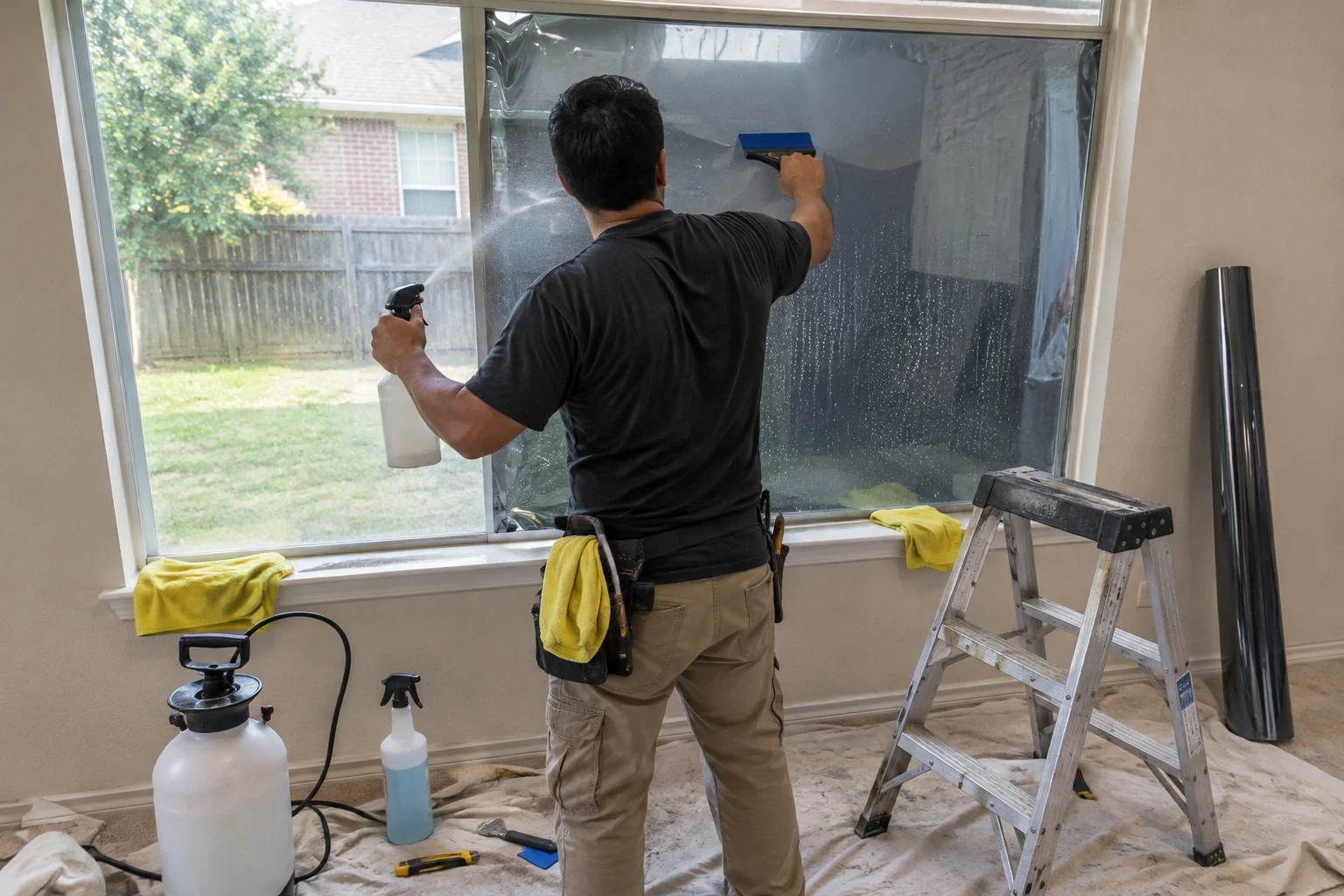
We scrape the glass with a razor to remove paint specks and mineral film, then apply the film over a slip solution. A squeegee pushes the water out so the adhesive bonds flat to the glass without bubbles or lift.
Precise edge trimming
Each piece is trimmed with a small, even gap at the gasket or frame. That gap lets the last moisture escape and keeps the film from catching when you clean.
Pattern layout and alignment
For stripes, borders or a frosted band at eye level, we measure and mark a reference line so the pattern sits level across every pane in the room. Matching panes in a set of French doors get the same height.
Protection and cleanup
We lay drop cloths under each window and use towels to catch runoff from the slip solution. Trimmings and backing liner leave with us.
Signs Decorative Film Is the Right Fix
- You keep a bathroom blind shut all day
- A closed blind kills the daylight and traps humid air against the glass. Frosted film gives you privacy with the blind open, so the room stays bright and the window can dry out.
- Your entry door shows the whole hallway
- Clear sidelites and transoms let anyone at the door see straight into the house. A frosted or etched-look film blocks that view without replacing the door glass.
- Glass partitions feel too exposed
- Office meeting rooms and home studies with glass walls often need a frosted band at seated eye level. People walking past see movement, not screens or paperwork.
- Plain glass that no longer suits the room
- Cabinet doors, shower panels and interior windows can take on a reeded, gradient or patterned look for far less than new glass.
- Old film is peeling or cloudy
- Aged vinyl film yellows, shrinks and lifts at the corners. We remove it, clean the adhesive residue off the glass and install fresh film.
How the Job Day Runs
- 1
Consultation and choice of film
On the phone we talk through which windows you want covered and why. At the visit we measure each pane, show samples on the glass and give you a written quote broken down by window.
- 2
Prep the room and glass
We clear a work area, lay drop cloths and pull any blinds out of the way. The glass is scraped and washed until it is free of dust and residue.
- 3
Apply and squeegee
Film goes on wet, gets positioned and aligned, then squeegeed from the center outward. We trim the edges and run a final pass with a hard card to force out remaining water.
- 4
Walkthrough and care notes
We look at every pane with you in natural light. Some small water haze is normal and clears as the film cures, usually within a few days to a couple of weeks depending on humidity. Wait about a week before cleaning, then use a soft cloth and an ammonia-free cleaner.
What Moves the Price of Decorative Film
We price decorative film by the window, after measuring, and put each line in a written quote. Two jobs with the same total square footage can price differently because the labor sits in cutting and fitting, not just in the film itself.
- Total glass area
- Larger panes use more film. A single wide window is usually faster than the same area split across many small pieces.
- Divided lites and shapes
- French doors with grids, arched transoms and oval door glass each need individual pieces cut and fitted. More pieces means more labor.
- Film type
- Stock frosted film is the simplest. Gradients, etched-look patterns and films that must be aligned across several panes take more material and more time.
- Access and height
- Stairwell windows and high transoms need ladders or staging, which adds setup time.
- Removing old film
- Stripping aged film and its adhesive is slow, careful work, so we quote it as its own line.
Decorative Window Tinting Questions
- Can people see through frosted film at night?
- Frosted film blurs the view in both directions, day and night, because it scatters light rather than reflecting it. With a lamp on inside, someone outside may see a glow and soft shapes moving, but not detail. That makes it different from reflective film, which can turn see-through after dark.
- Will decorative film help with heat or energy bills?
- Somewhat, but it is not built for that job. Frosted film blocks some solar heat and many decorative films carry UV inhibitors, yet a ceramic film rejects far more heat. Where the real goal is a cooler room, we will recommend ceramic film on the sunny panes and keep decorative film for privacy glass.
- Can it go on a shower door or bathroom glass?
- Yes. The film goes on the dry side of a shower enclosure or the inside of a bathroom window. We check the glass first, and we ask you to give it time to cure before steam and regular cleaning.
- Is decorative film removable later?
- It is. We can strip it with steam or gentle heat and a razor, then clean off the adhesive, leaving the glass as it was. Renters and people who like to change a room's look often choose film for this reason.
- Can you match film across several windows or doors?
- Yes. We set a reference line so stripes, borders and frosted bands sit at the same height across every pane in the room, including matched French doors.
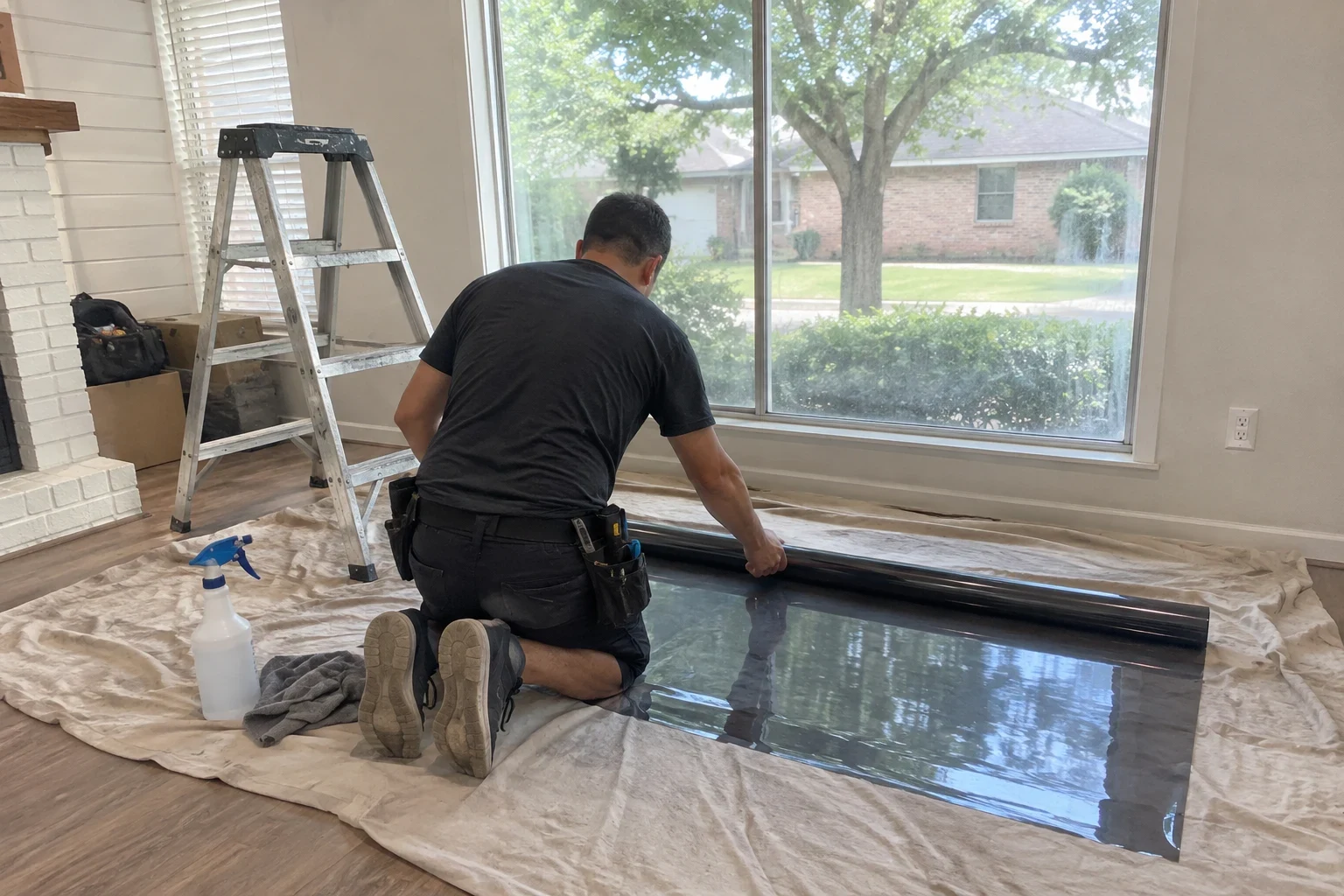
Hold the Samples Up to Your Own Windows
Let us know which panes give you trouble. We will come out with film swatches, measure every piece of glass and hand you a written quote line by line, and there is no charge for that visit.