ServicesTurf Protection Window Film
Turf Protection Window Film in Dickinson
If a strip of your artificial turf has melted or a neighbor's siding has warped, a nearby window is probably focusing sunlight like a magnifying glass. We find the window doing it and apply film that scatters the reflection so the hot spot stops forming.
Why a Window Can Melt Turf
Most newer double-pane windows have a low-E coating, a microscopically thin metal layer that reflects infrared heat. That coating is good for your energy bills, but it also makes the outer pane a strong mirror. The sealed air or argon space between the panes expands and contracts with temperature and pressure, so the glass can bow slightly inward. A concave pane focuses reflected sunlight into a narrow, intense beam.
Where that beam lands, temperatures can climb past the point where polyethylene and polypropylene turf fibers soften and fuse. The same thing happens to vinyl siding, plastic trim, outdoor cushions and the rubber infill under synthetic grass. Turf protection window film changes how the glass reflects. Instead of a tight beam, the light leaves the window diffused, spread over a wide area at a temperature turf and siding can handle.
This is a targeted fix. We treat the one or two panes causing the problem, not every window in the house, and we keep the low-E performance that keeps your rooms cool through a long Gulf Coast summer.
What the Work Includes
Tracing the reflection
We stand where the damage is and work back along the sun's angle to the source pane. Sometimes it is your own window. Sometimes it is a neighbor's, and we will tell you that plainly.
Confirming the hot spot
We check surface temperatures at the damage site with an infrared thermometer at the time of day the beam hits. That tells us how strong the focus is and which film will break it up.
Film selected for the glass
Low-E and argon-filled units have limits on what film can go on them without stressing the seal. We match the film to the glass type so the fix does not create a new problem with the window.
Precise application
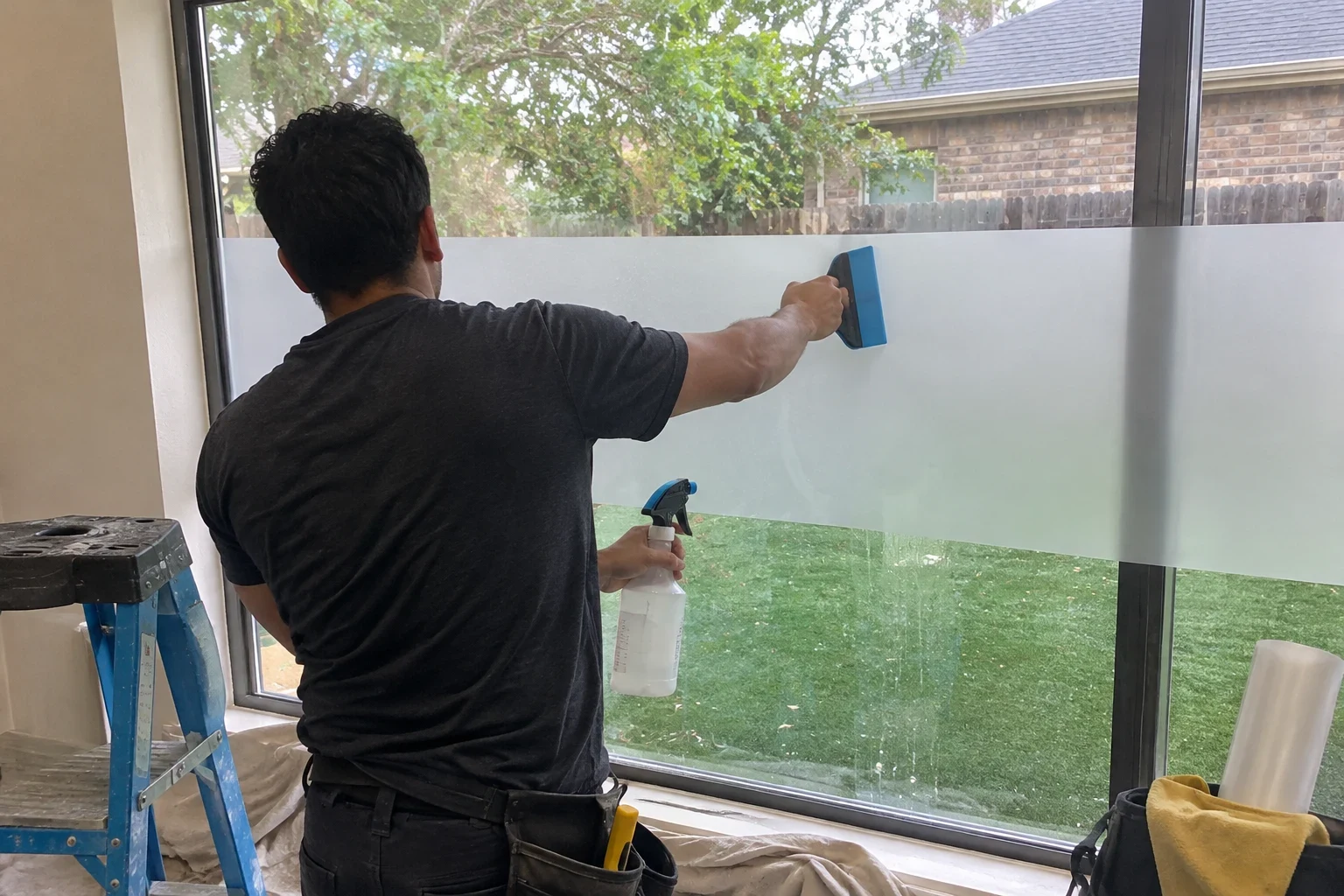
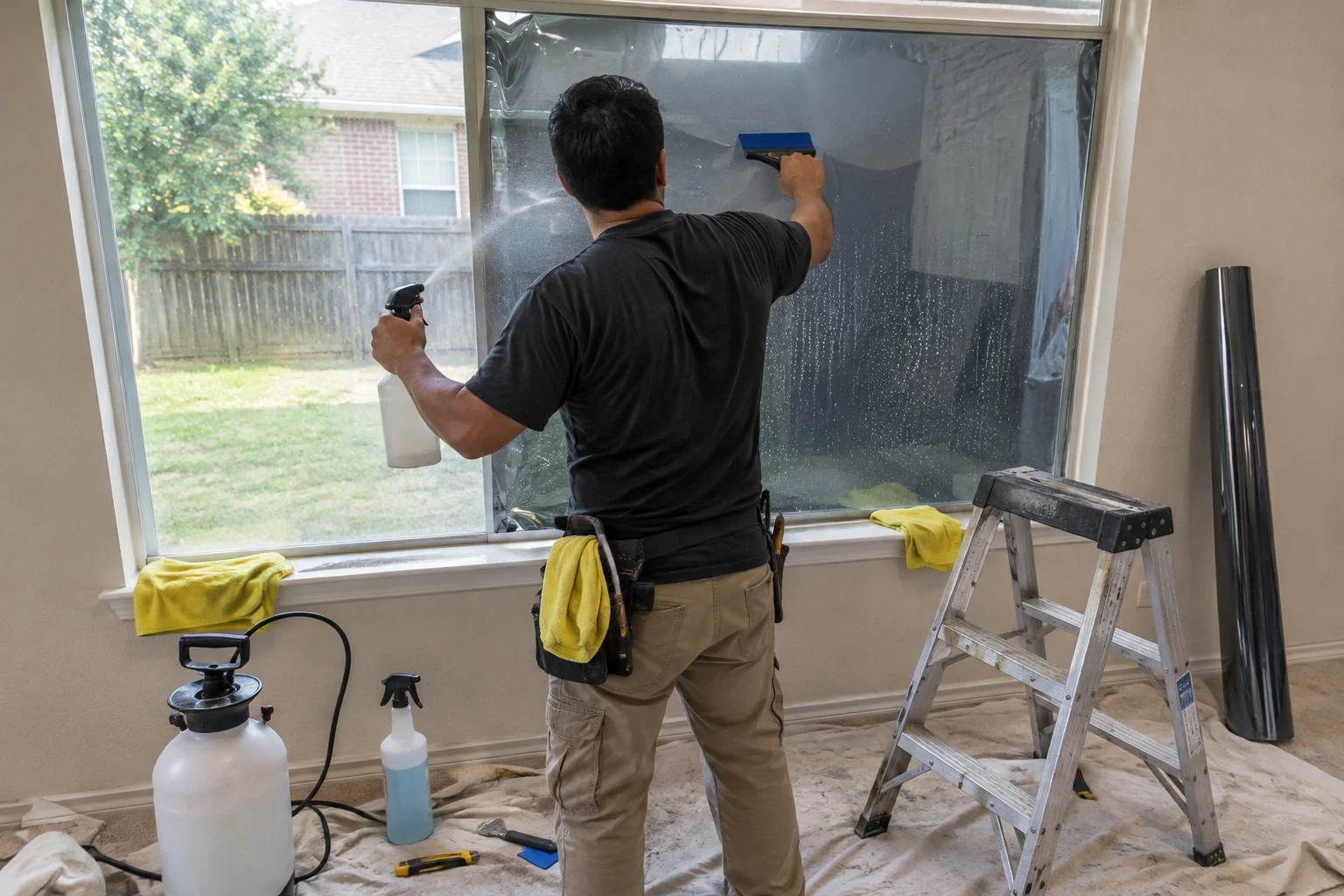
The glass is cleaned of dust and mineral film, the film is cut to the pane, squeegeed flat and edge-sealed. Turf-protection films are often exterior-grade, so we prepare the outside surface as carefully as the inside.
Follow-up check
After the film cures, we can recheck the landing spot during the same sun window to confirm the temperature has dropped where the turf or siding was melting.
Signs a Window Is Focusing Sunlight
- A melted streak in synthetic grass
- Look for a narrow band or curved line where blades have matted, shriveled or turned glossy. It often follows the path the sun traces across the yard.
- Warped or rippled vinyl siding
- A wavy section of siding on your house or the house next door, especially across from a large window, is a classic sign. Paint and caulk won't fix it while the beam keeps landing there.
- Damage that shows up seasonally
- The beam only lines up at certain sun angles. Many people notice new melting in fall or late winter when the sun sits lower, then nothing for months.
- A smell of hot plastic outside
- Patio furniture, cushions or a plastic planter that softens or smells scorched in one spot points to concentrated reflection rather than general heat.
- New turf damaged soon after install
- If fresh turf melts within weeks, the cause is almost always reflection. Replacing the turf without treating the window only repeats the damage.
How the Job Runs
- 1
Phone consultation
You describe where the damage is, which direction it faces and when you notice it. We set a visit for a sunny time of day when the reflection is likely to be active.
- 2
On-site diagnosis
We trace the beam, take temperature readings and identify the exact pane. You get a clear answer on which windows need film and why.
- 3
Film installation
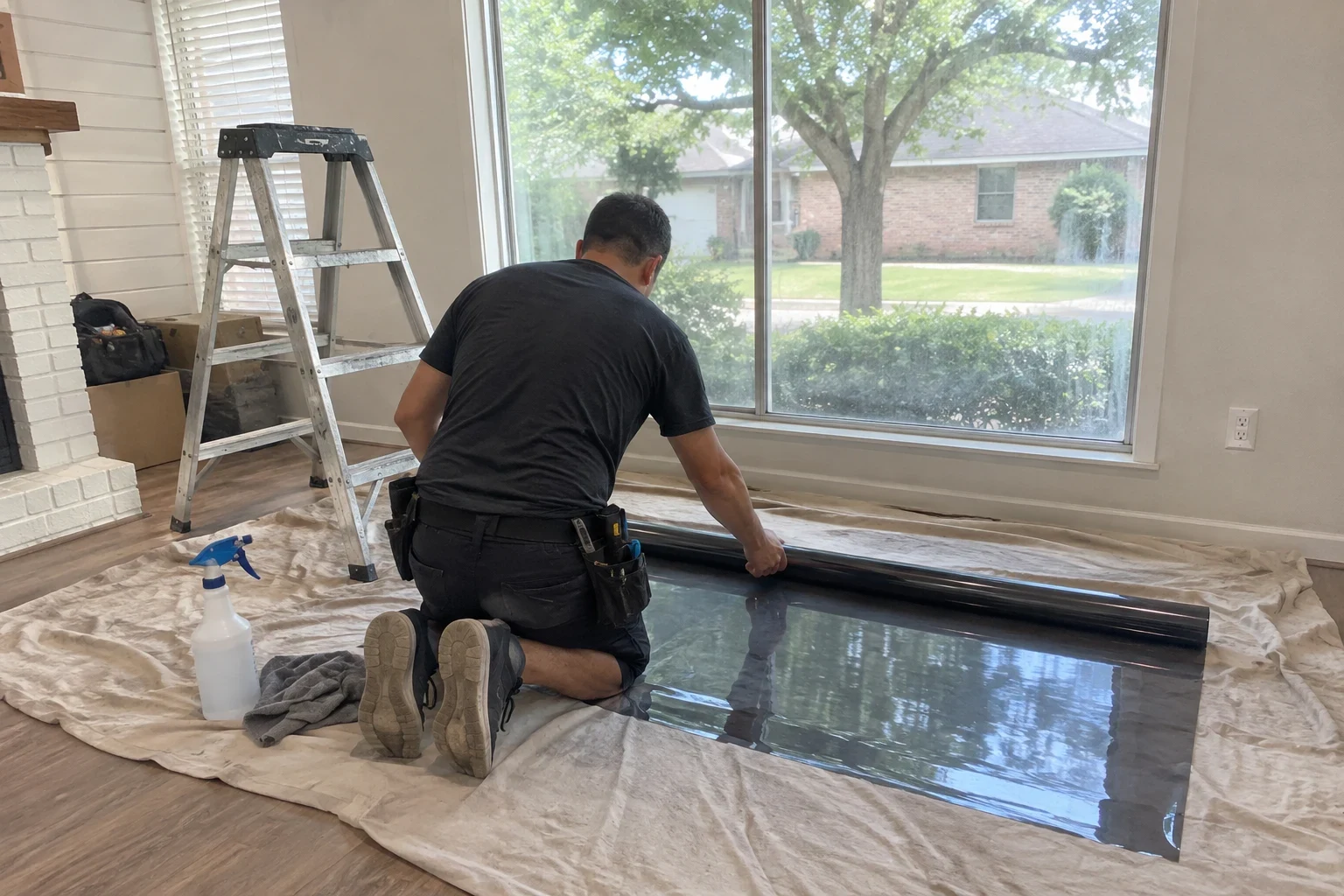
Most turf jobs involve one to a few panes and take a short visit. We protect the sill and nearby floors, clean the glass thoroughly and install the film with edges sealed against moisture.
- 4
Cure and recheck
The film needs a few days to dry fully, so avoid cleaning the glass during that time. We can come back to confirm the hot spot is gone.
What Moves the Cost
Turf protection is priced by the pane, so the number of windows causing the reflection matters most. We give you a written quote after we have traced the beam, so you only pay to treat the glass that is actually responsible.
- Number and size of panes
- One sliding door panel is a smaller job than a run of tall picture windows. Larger glass also tends to bow more, which can call for a stronger diffusing film.
- Access to the glass
- Ground-floor windows are straightforward. Second-story panes or glass above a roofline need ladders or extra setup, especially for exterior-applied film.
- Film type
- Exterior-grade diffusing films carry a different material cost than interior films. The right choice depends on your glass and how intense the focused reflection measured.
- Glass condition
- Old adhesive, hard water spots or failing factory film must be removed first. A unit with a broken seal may need attention before film makes sense, and we will point that out.
Turf Protection Film Questions
- Will the film make my window look frosted or dark?
- Turf protection films are designed to keep the view mostly clear from inside. From outside, the glass may look slightly less mirror-like, which is the point. We can show you a sample on your glass before we install.
- Does this undo the energy benefit of my low-E windows?
- No. The low-E coating keeps doing its job on heat transfer. Some diffusing films also cut a portion of incoming solar heat, so the treated rooms can feel a little cooler in the afternoon.
- The reflection is coming from my neighbor's window. Can you help?
- We can trace it and show you exactly which pane is responsible. The film has to go on that window, so it takes the owner's agreement. Many neighbors are glad to fix it once they see the damage.
- Can't I just move the turf or put up a screen?
- Screens and shade sails can block the beam, but the reflection still lands on something, often siding or a fence. Treating the glass removes the focus at its source instead of moving the damage elsewhere.
- How do I know it worked?
- We measure the surface temperature at the damage spot before installation and again after the film cures, at the same sun angle. A clear drop in temperature confirms the beam has been diffused.
Stop the Beam Before the Next Turf Repair
We will trace the reflection, confirm which pane is causing it and explain the fix before any film goes on. Homes in Dickinson, League City, Friendswood and nearby towns are in our regular area.