ServicesCommercial Window Tinting
Commercial Window Tinting in Dickinson
We install commercial window film on storefronts, offices and warehouses to cut solar heat gain, glare and UV fading. You get a film matched to your glass and how the space is used, installed around your business hours, with clear numbers on what it changes.
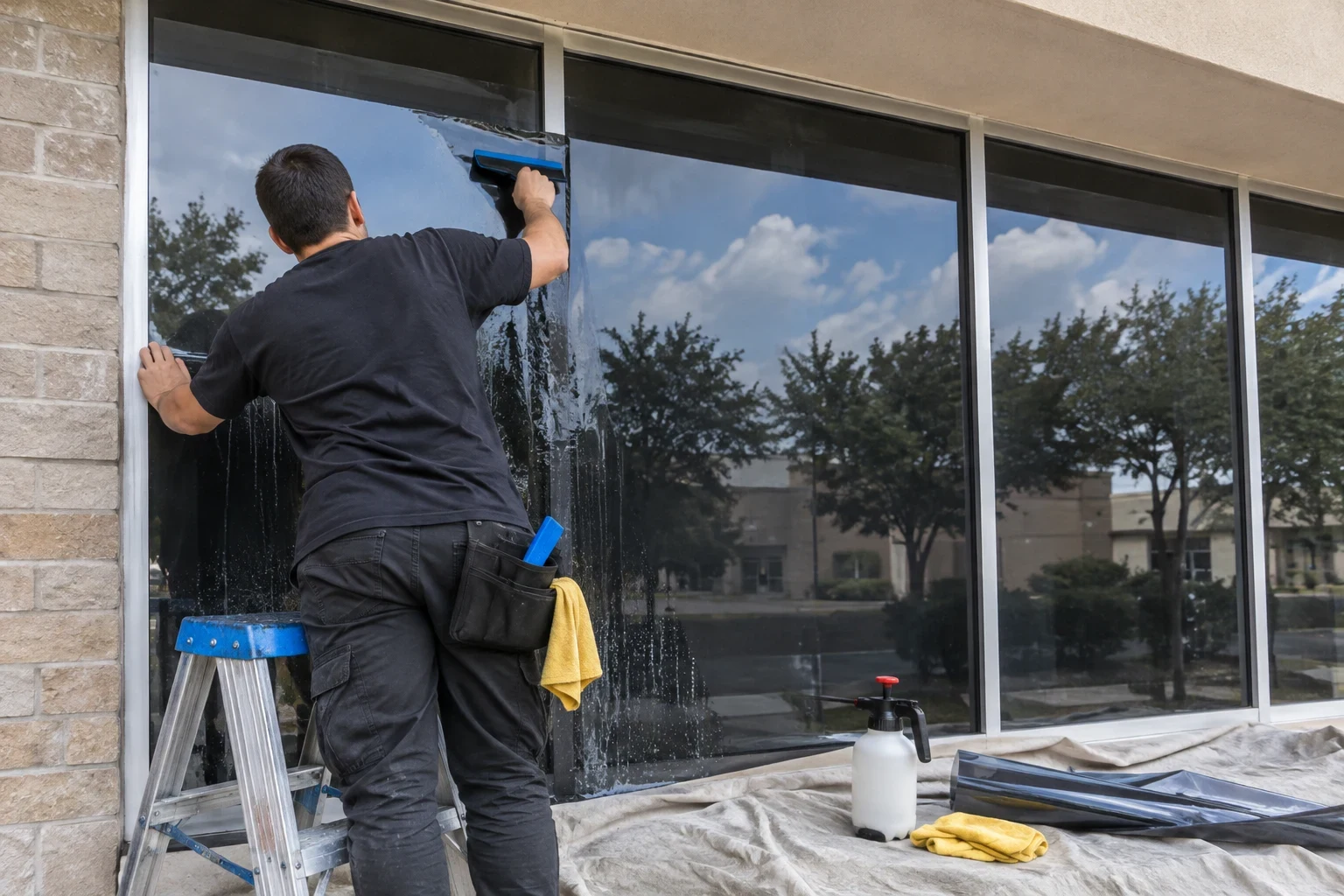
What commercial film does to a building's heat load
Most of the heat that comes through a commercial window arrives as infrared and visible light, which turns into heat once it hits floors, shelving and people. A spectrally selective or ceramic film on the interior surface rejects a large share of that energy at the glass. Your HVAC units run shorter cycles, and the rooms on the west and south sides stop running warmer than the rest of the building.
Commercial tinting is the right call when cooling costs climb every summer, when glare makes screens or registers hard to read, or when merchandise near the glass fades. On a Gulf Coast summer afternoon a bare west-facing storefront is often the hottest zone in the building, and that is usually where film pays back first.
We are plain about limits. Film will not fix a failing air handler or leaky door sweeps, and the wrong film on the wrong glass can cause thermal stress cracks. We check that before we recommend anything.
What a commercial job includes
Glass and exposure survey
We record each pane's type (annealed, tempered, laminated or insulated), its size and which direction it faces. That tells us how much heat each opening is adding and which films are safe on it.
Film matched to compatibility charts
Film manufacturers publish film-to-glass charts that limit dark, heat-absorbing films on large annealed panes and dual-pane units. We choose only from films that pass for your glass, then compare visible light transmission, total solar energy rejected and how the building will look from outside.
Sample on your own glass
Where it helps, we apply a sample piece so you can judge the shade from your desk and from the parking lot before you commit.
Prep and installation
Glass is scraped of paint flecks, labels and old adhesive, and gaskets are wiped down so grit does not end up under the film. Each panel is trimmed with a small edge gap so it does not lift where the glass meets the frame.
Protection and cleanup
Drop cloths go under every window and displays are moved back only with your OK. Trimmings, liners and wet towels leave with us.
Signs your building needs window film
Hot zones near the glass
Staff move away from certain desks or counters by mid-afternoon. That spot is absorbing direct solar gain the thermostat cannot keep up with.
Glare on screens and registers
Reflections wash out monitors, point-of-sale screens and digital signage at the same hours every day.
Faded stock and finishes
Packaging, fabric, flooring or upholstery near the windows is lighter than the same items deeper in the room. UV and visible light do that damage, and film blocks nearly all of the UV.
Blinds closed all day
Blinds stop heat only after it has passed through the glass, so the room still warms up and you lose the daylight. Film stops much of that energy at the pane and keeps the view.
Old film failing
Bubbling, peeling edges or a purple cast mean the adhesive or dyes have broken down. That film is no longer rejecting much heat and needs to come off.
How the job runs
- 1
Free on-site consultation
After your phone call we visit, measure the glass, note exposures and ask how the space is used. We point out any panes where film is not a safe idea.
- 2
Written quote by window group
You get a quote that lists the film chosen for each elevation or room, the square footage and any removal or access work. Nothing is added later without your approval.
- 3
Scheduling around your hours
We can work early, after close or section by section so customers and staff are not displaced. Larger buildings are usually done one elevation at a time.
- 4
Install and curing
Each pane is wet with a slip solution, the film is positioned, and the water is squeegeed out from the center. Expect light haze or small water pockets for several days to a few weeks; humid weather slows curing, and the glass should not be cleaned during that time.
What moves the price
Commercial jobs are priced mainly by the square footage of glass and the film chosen, then adjusted for what it takes to reach and prep each pane. Your quote breaks those pieces out so you can see where the money goes. We do not post prices because two buildings with the same amount of glass can differ a lot in access and prep.
- Glass area and pane count
- More square footage means more film, but many small divided panes take more labor per foot than a few large storefront lites.
- Film type
- Ceramic film costs more than dyed or metalized film and rejects infrared heat without a mirror look. Reflective film rejects the most heat for the money but changes how the building looks from outside.
- Access and height
- Clerestory windows, atrium glass and panes behind fixed displays may need tall ladders or a lift.
- Removing old film
- Stripping aged film and its adhesive is slow work, especially when the adhesive has baked onto the glass.
- After-hours scheduling
- Working nights or weekends to keep you open can stretch the job across more visits.
Commercial window tinting questions
Something not covered here? (281) 378-5740
Will film damage our insulated glass units?
It can if the film absorbs too much heat for that unit, which stresses the glass and the edge seal. We check the film maker's compatibility chart for your glass type and pane size and choose a film approved for it. If you have documents from the glass or window manufacturer, we will review those terms with you too.
Can you work while we are open?
Yes. We work in sections, keep wet work and drop cloths out of walkways, and can schedule early mornings, evenings or weekends. The process is quiet, with no cutting tools louder than a utility knife.
How much will this lower our energy bill?
That depends on how much glass you have, which way it faces and how your HVAC is set up, so we will not promise a percentage. We can show you the published solar heat rejection numbers for each film we propose, and buildings with large west or south glass usually see the clearest difference.
Will the building look mirrored from the street?
Only if you want it to. Our Reflective Window Film page covers the mirrored look, which rejects the most heat, and our Non-Reflective Window Film page covers ceramic and neutral films that look close to clear glass.
Do you handle offices and security film as well?
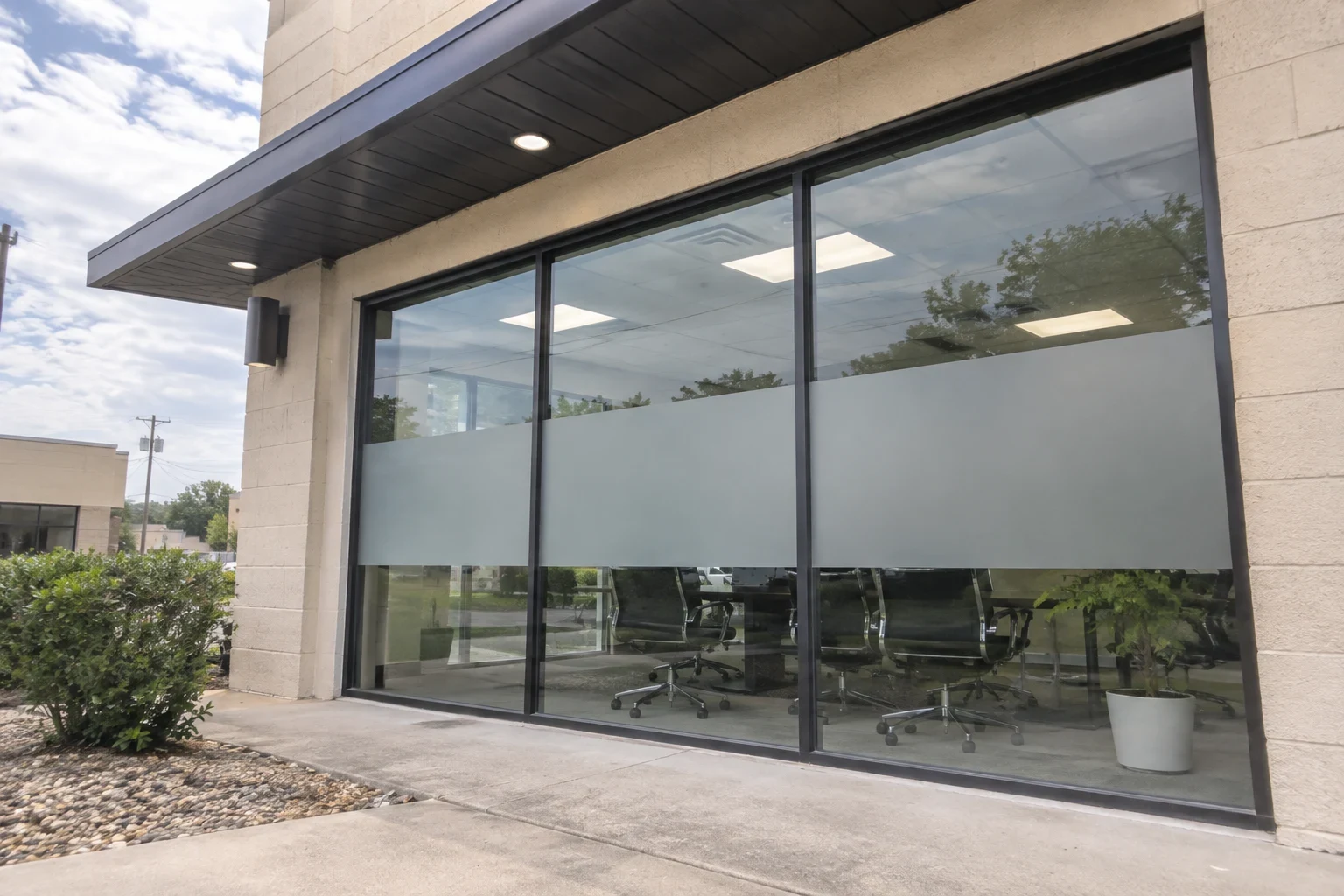
We do. Office Window Tinting covers glare control and interior glass in workspaces, Security Window Film holds broken glass together after an impact, and Decorative Window Tinting adds frosted or patterned film for conference rooms and entries.
Find out what film would change in your building
One phone call sets up a free consultation at your site. We measure the glass, check which films are safe on it and give you a written quote you can compare.