ServicesHome Window Tinting
Home Window Tinting in Dickinson
We apply window film to the inside of your glass to block the infrared heat and UV light that warm rooms and fade floors. You keep the view and most of the daylight, and your air conditioner gets a break on sunny afternoons.
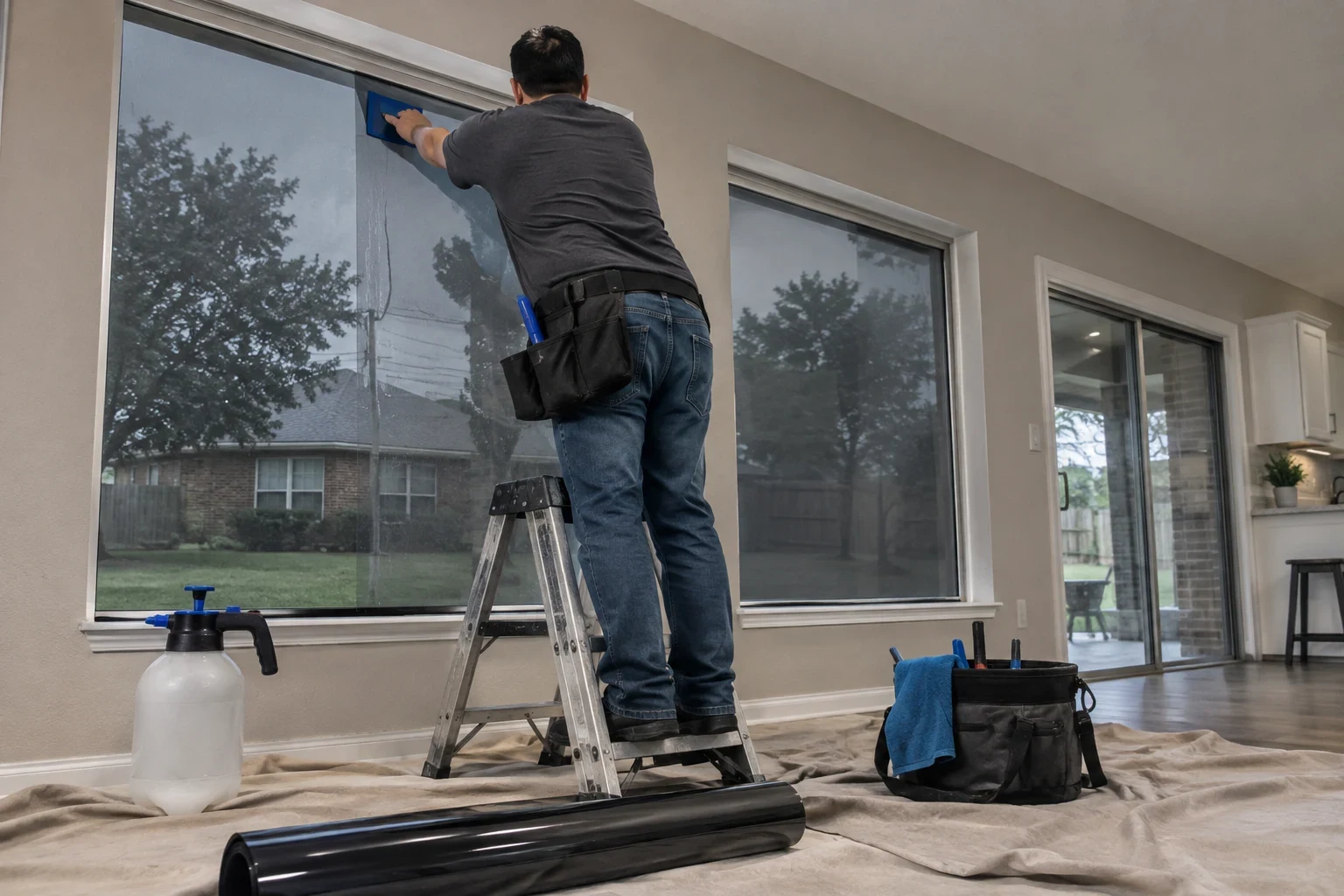
What window film actually does to a sunny room
Home window tinting is a thin polyester film, held to the interior face of the glass by a clear pressure-sensitive adhesive, that controls how much of the sun's energy passes through. A large share of solar heat arrives as infrared light you cannot see. That is why a well-chosen film can cut heat gain noticeably while the room still looks bright.
The difference shows up most on east and west windows and on big panes like sliding patio doors, where direct sun makes one room the warmest in the house by midafternoon. With a Gulf Coast cooling season that runs most of the year, stopping that heat at the glass means the system cycles less and rooms stay closer to the thermostat setting.
We match the film to the problem. Ceramic film suits people who want strong heat rejection with a light, clear look. A darker or reflective film fits rooms where glare is the main complaint. If privacy or a frosted finish is the real goal, our privacy window tinting and decorative window tinting pages cover those options.
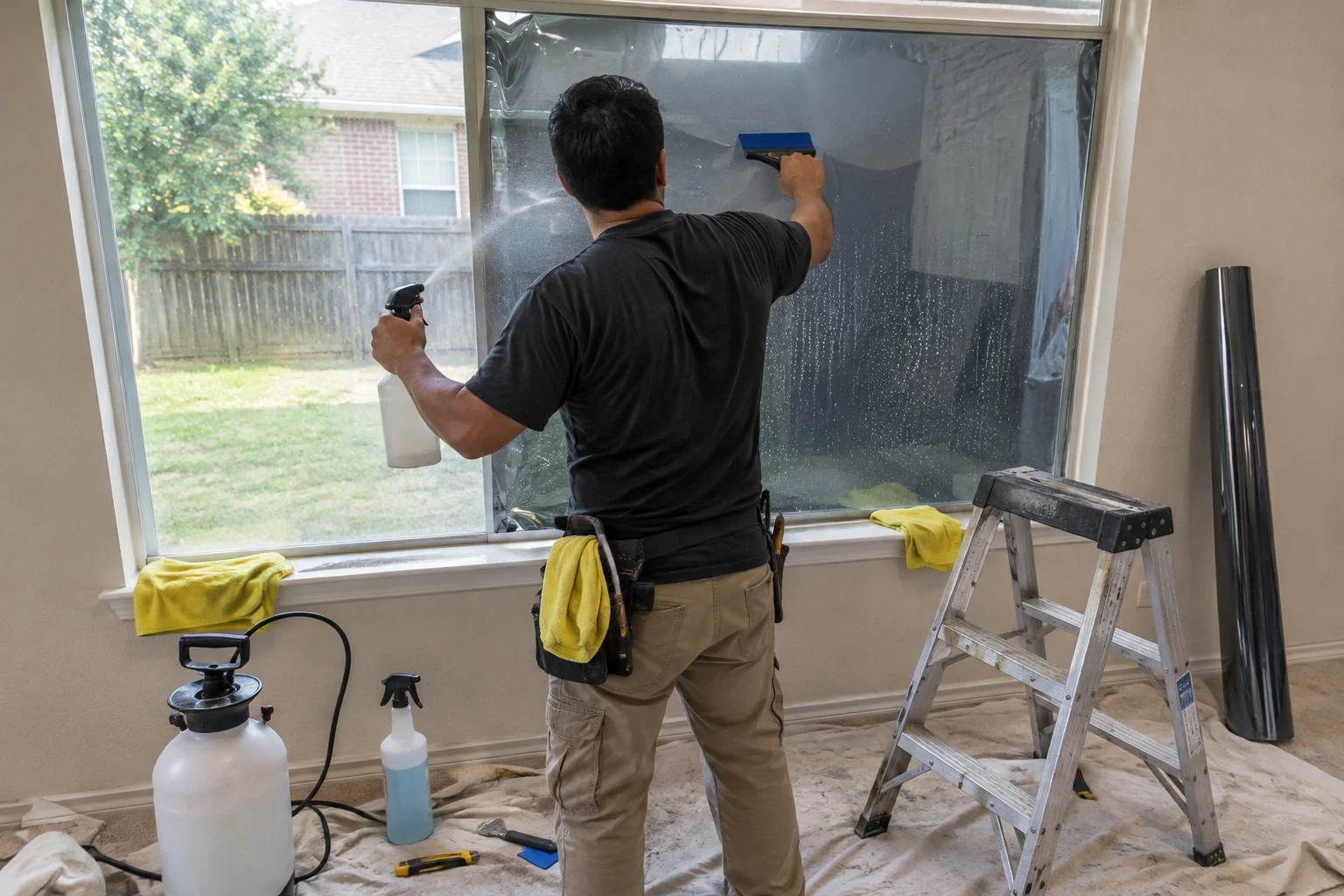
What our home tinting work includes
- 01
A window-by-window assessment
We note which way each window faces, the glass type (single-pane, dual-pane or low-E) and which rooms run hot. That tells us where film will pay off and where it will not.
- 02
Film samples on your own glass
We hold samples against your windows so you can see the shade from inside and the look from the street. We walk you through the spec sheet numbers that matter: visible light transmission, solar heat rejection and UV blocking.
- 03
A glass compatibility check
Film absorbs some of the sun's energy, which warms the pane. On dual-pane units that extra heat can stress the glass and the edge seals, so we check the film maker's glass guidance before recommending a product.
- 04
Careful prep and installation
Each pane is scraped with a razor blade and cleaned to the edges, because a single grain of dust leaves a visible bump. We trim the film to leave a narrow gap at the gasket and squeegee out the slip solution.
- 05
Floor protection and cleanup
Towels go on sills and drop cloths on floors near the work. We move what is in the way, put it back and carry out every trimming.
Questions about Home Window Tinting?
Call(281) 378-5740Signs your windows need film
One room is always hotter
A bedroom or living room that stays warm after the rest of the house has cooled is usually taking direct sun through a large window.
Floors and furniture are fading
Bleached spots on hardwood, rugs or upholstery come from UV and visible light. Film blocks nearly all UV and slows the fading.
Glare washes out your screens
If you shift the couch or close blinds to watch TV or work on a laptop, glare reduction film fixes it without blocking the window.
The AC runs long on sunny afternoons
When the system rarely shuts off between three and six, solar heat gain through the glass is often a big part of the load.
The blinds stay closed all day
Keeping shades down to manage heat means you paid for windows you never use. Film lets you open them again.
How a home tinting job runs
- 1
A free consultation by phone
Tell us which rooms bother you, roughly how many windows there are and what the problem is: heat, glare, fading or privacy. We set a time to come look.
- 2
Measuring and a written quote
At your home we measure every pane, check the glass and show samples. The written quote breaks the job down pane by pane and names the film we recommend for each, with nothing rolled into a single total.
- 3
Installation day
We work room by room, prepping and filming each window before moving on. A typical house is done in one visit, while larger homes or tall windows can take longer.
- 4
Curing and a walkthrough
Before we leave, we look at every window with you and explain what normal curing looks like and how to clean the film once it has set.
What sets the price of home window tinting
Your quote depends on the windows themselves and the film you choose. Every pane gets its own line, so you can see what each window adds to the total and leave off any that would not repay the cost in comfort.
- Window count and size
- Film is priced by area, and large panes need more material and more care to lay without seams.
- Film type
- Ceramic film costs more than dyed film because its nano-ceramic particles reject heat without darkening the glass or interfering with phone signals.
- Access and shape
- Second-story windows, transoms over doors and arched or angled glass need ladders, templates and extra time.
- Old film removal
- Peeling or purple, bubbled film has to be steamed and scraped off, along with its adhesive, before new film goes on.
Questions about home window tinting
Will window film make my rooms dark?
Not unless you want it to. Many ceramic films let most visible light through while rejecting a large share of infrared heat. We show you samples on your glass so you choose the shade with your own eyes.
Is film safe on dual-pane or low-E windows?
Usually, with the right product. Film raises the temperature of the glass, so we follow the film maker's guidance for your glass type. Some window manufacturers also have terms about aftermarket film, and we can help you check the labels on your units.
How much will tinting lower my energy bill?
It depends on how many windows face the sun, your glass and your insulation, so we will not quote you a figure. What we can tell you is where solar heat is entering and which film cuts it most, and on sun-facing rooms the comfort change is easy to feel.
Why do I see haze or small water pockets after installation?
That is leftover slip solution drying out through the film. It clears on its own as the adhesive cures. In humid weather the process takes longer, so give it a few weeks before judging the result.
How do I clean tinted windows?
Wait until the film has cured, then use a soft cloth or rubber squeegee with mild soap and water. Skip ammonia cleaners, paper towels and anything abrasive, which can haze or scratch the surface.
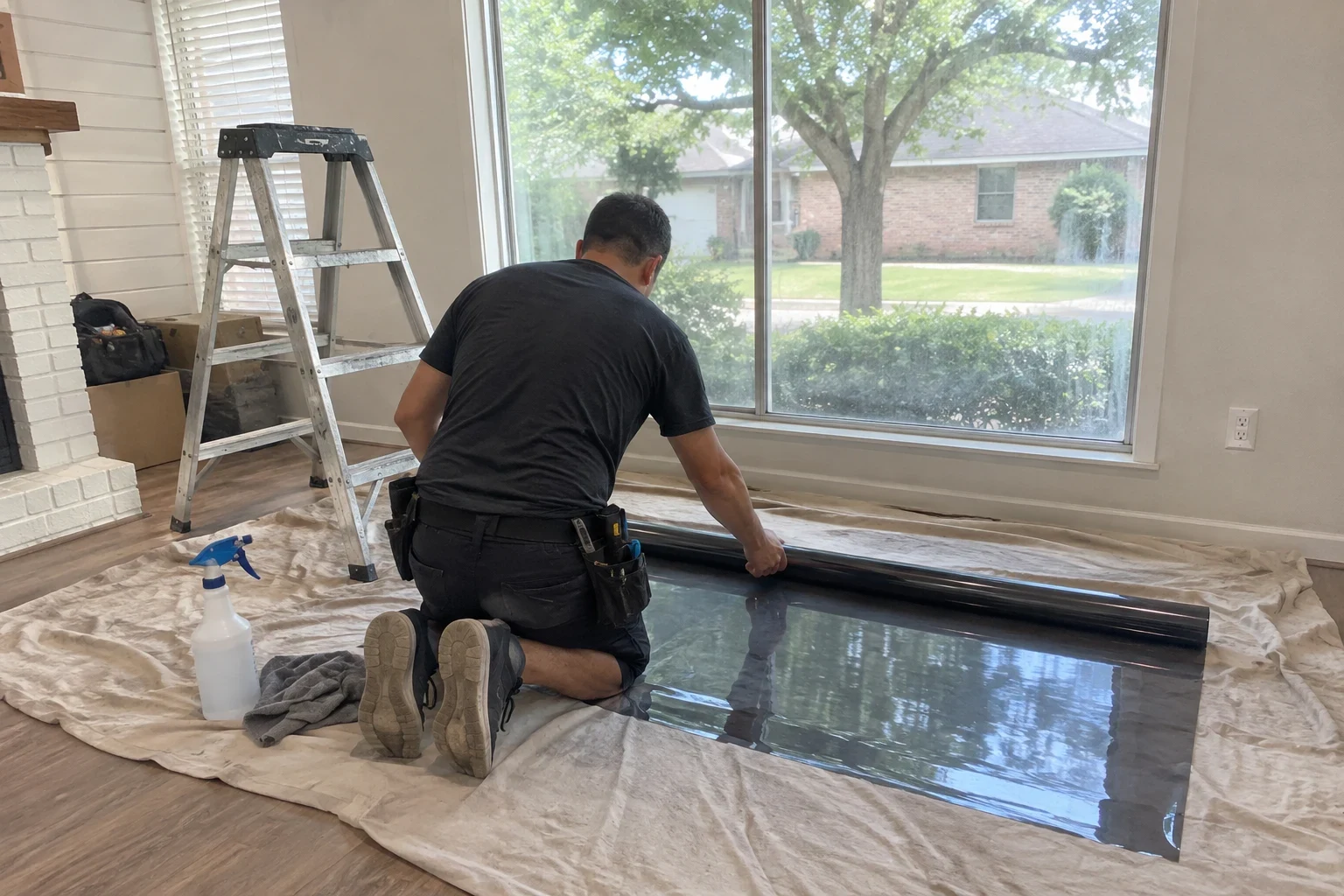
Find out which windows cost you the most
We will tell you which panes are worth filming and which film fits each one. The visit and the quote are free.