ServicesReflective Window Film
Reflective Window Film in Dickinson
Reflective window film uses a thin metallized layer to bounce solar heat back outside before it reaches your rooms. We check your glass, measure the sun exposure and fit the right reflectance level, so hot rooms cool down and your air conditioner runs fewer cycles.
What Reflective Film Does and When It Fits
Most of the heat that comes through a window arrives as near-infrared sunlight. Reflective film carries a microscopically thin coat of metal, usually aluminum or a sputtered alloy, laminated inside a polyester film. That metal reflects a large share of the infrared and visible light instead of absorbing it, which is why reflective film tends to post the highest total solar energy rejection of any film type we install.
It is the right call for glass that takes direct afternoon sun for hours: west-facing living rooms, sunrooms, upstairs bedrooms that never cool off, and storefront or office glazing. On a Gulf Coast summer afternoon, those panes are what keep the AC compressor running.
The trade-off is appearance. From outside in daylight the glass reads as a mirror, and at night, when the room is brighter than the yard, the effect flips toward the inside. If that look does not suit you, our Ceramic Window Film or Non-Reflective Window Film pages cover the lower-reflectance options.
What the Job Includes
Glass and frame check
We identify single-pane, dual-pane, tempered and low-E glass before recommending a film. Dark or highly reflective film raises the glass temperature, and some insulated units need a lighter film to avoid thermal stress cracks.
Reflectance level matched to the room
Reflective films come in several visible light levels. We show samples on your actual window so you can see how bright the room stays and how much mirror you get from the street.
Removal of failed film
Old film that has bubbled, purpled or peeled is steamed and scraped off, and the adhesive residue is cleaned down to bare glass. New film will not bond properly over old adhesive.
Wet installation and edge finishing
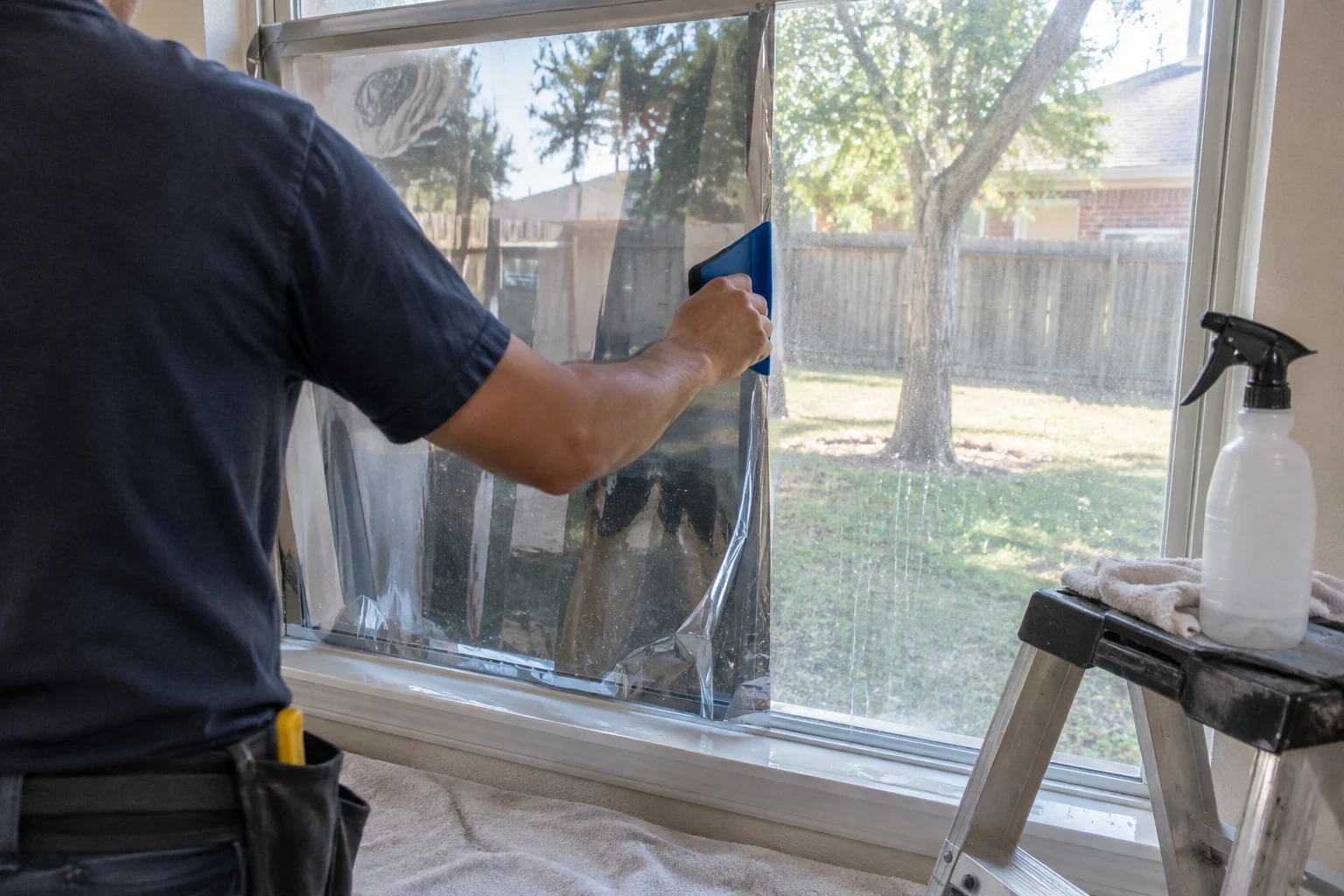
Each pane is washed, and we trim the film a hair short of the rubber seal around the glass so its edge never rides up onto the frame. The slip solution is then pushed out from the middle toward the edges so the adhesive lies flat.
Furniture and floor protection
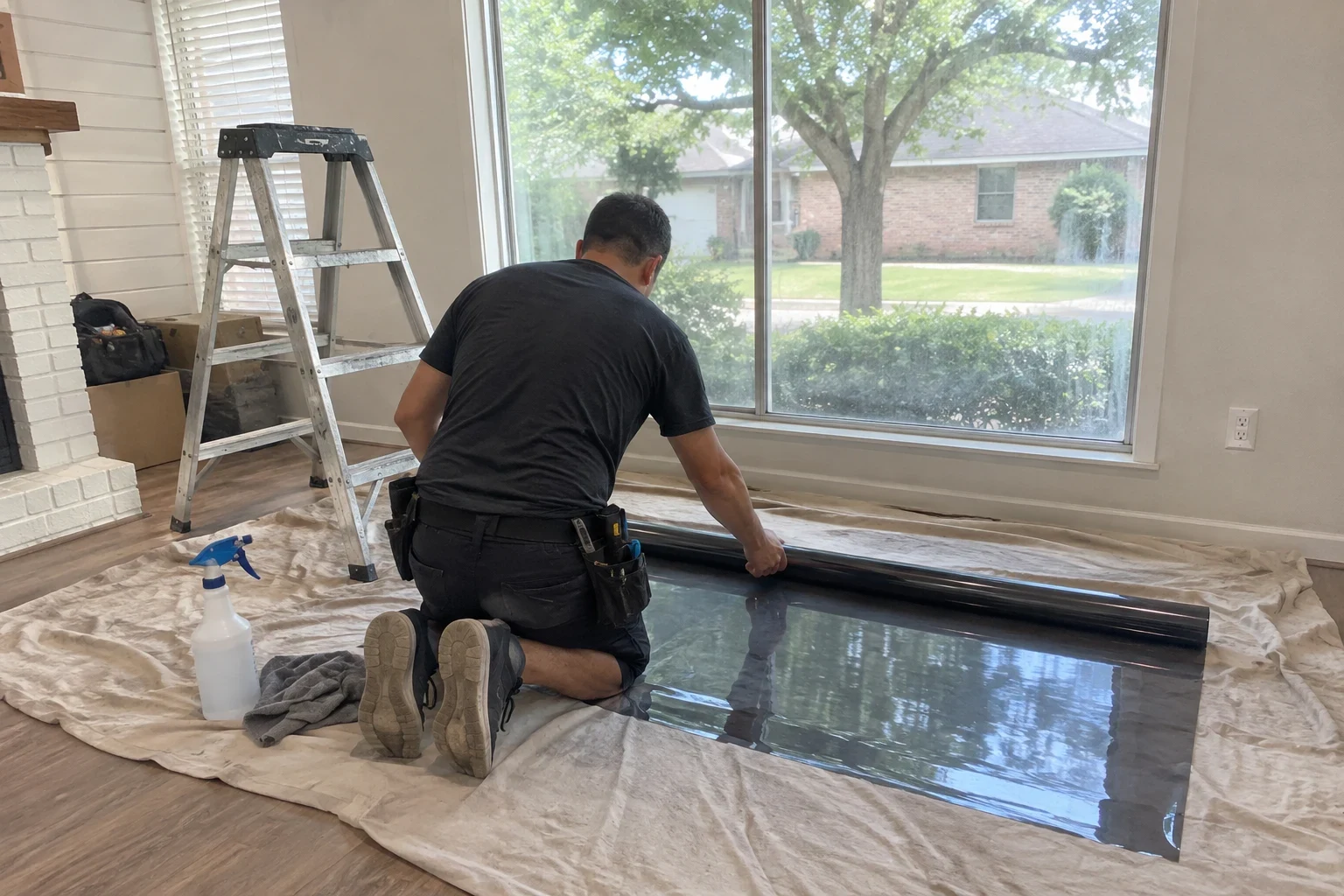
We move what needs moving, lay drop cloths under the windows and leave the room the way we found it, minus the scraps.
Signs Reflective Film Makes Sense
One room runs hotter than the thermostat
If the thermostat reads fine but the sunny room is several degrees warmer, the glass is the likely heat source. Reflective film targets that solar gain directly.
Afternoon glare on screens and floors
Glare off TVs, monitors and polished floors is reduced because the film cuts visible light, not just heat.
Faded rugs, wood and fabric
The film blocks nearly all UV, which slows fading. Visible light and heat still play a part, so reflective film helps more than a UV-only coating.
Cooling bills spike in summer
When most of the house is shaded and only a few big windows face the sun, filming those panes is a targeted way to trim the AC load.
You want daytime privacy
The mirror effect keeps passersby from seeing in during the day. For round-the-clock privacy, Privacy Window Tinting is the better match.
How the Work Goes
- 1
Consultation by phone, then a visit
You tell us which rooms overheat and which way they face. We visit, measure every pane, confirm the glass type and walk you through film samples.
- 2
Written quote
You get a line-item quote listing each window, the film chosen and any old film removal, so you know what the cost covers before work is scheduled.
- 3
Installation day
A typical home takes a few hours to a day. We prep the glass, apply the film wet, trim the edges and clean up.
- 4
Curing
Small water pockets or a light haze are normal for days to a few weeks while moisture escapes through the film. Wait about a month before cleaning, then use mild soap and a soft cloth, never a razor or abrasive pad.
What Moves the Price
Reflective film is priced mostly by the square footage of glass and the effort to reach it. We measure on site rather than guessing, and the quote spells out each driver below.
- Total glass area
- More square feet means more film and more labor. Large picture windows and sliding doors add up faster than standard bedroom windows.
- Access and height
- Second-story transoms, stairwell glass and windows behind built-ins take ladders or scaffolding and more time.
- Film grade
- Dual-reflective films, which have a lower-reflectance inner face to reduce the nighttime mirror, cost more than single-reflective films.
- Old film removal
- Stripping baked-on film and adhesive is slow work and is quoted per window.
- Pane count and shape
- Divided-lite or arched windows need many small cuts, which takes longer than one large pane of the same area.
Reflective Film Questions
Something not covered here? (281) 378-5740
Will reflective film make my rooms dark?
It depends on the shade you pick. Lighter reflective films still let in a good amount of daylight while rejecting much of the heat. We show samples on your own glass so you can judge the brightness before deciding.
Can I see out at night?
At night the inside becomes the bright side, so you see more of your own reflection and less of the yard. Dual-reflective films reduce that effect. If evening views matter most, ceramic film is worth comparing.
Can it crack my dual-pane windows?
Any film that absorbs heat raises glass temperature, which can stress some insulated units. That is why we check the glass type, size and exposure first and only recommend films rated for that glass.
Does the metal affect cell or Wi-Fi signals?
The metal layer can dampen phone signal a little, and you notice it most in a room where film covers all of the glass. If reception inside is already marginal, a ceramic film with no metal in it avoids the issue, and we can talk through that option.
How much will it lower my energy use?
Results depend on how many windows are filmed, their orientation and your insulation. Filming the sun-facing glass reduces solar heat gain, which shortens AC run time in those rooms. We will not promise a specific bill amount.
Cool Down the Rooms That Take the Sun
Tell us which windows bake in the afternoon and we will check the glass, show you reflectance samples and give you a written quote. We work in Dickinson, League City, Texas City and nearby towns.