ServicesNon-Reflective Window Film
Non-Reflective Window Film in Dickinson
Non-reflective window film rejects solar heat and blocks UV while your glass keeps its normal look from the street and from inside. We match the film to each window's sun exposure and glass type, so rooms run cooler without a mirrored finish.
Heat control without the mirror look
Traditional reflective films stop heat by bouncing sunlight off a metalized layer. That gives the glass a mirror finish outside and can turn your windows into dark mirrors at night. Non-reflective film works differently. Most of the products we install use ceramic or carbon particles that absorb and reject infrared energy, the part of sunlight you feel as heat, while exterior reflectance stays close to that of untreated glass.
That makes it the right call when you want a lower cooling load but your HOA restricts mirrored glass, you would rather not change how the house looks, or you like seeing out clearly after dark. In a Gulf Coast summer, unshaded west and south windows carry much of the afternoon heat into a room. Cutting that solar gain gives your air conditioner less to fight, which is where the comfort and energy savings come from.
It is not the strongest choice for daytime privacy. If you need people outside to stop seeing in, our Privacy Window Tinting and Reflective Window Film pages cover films built for that job, and we will tell you plainly which one fits.
What the job includes
Window-by-window assessment
We note each window's orientation and glass type: single-pane, dual-pane, low-E, tempered or laminated. We also look at frames and seals. Those details decide which films are safe and worth applying on each opening.
Film-to-glass compatibility check
Absorbing films raise the temperature of the glass. On dual-pane units and large annealed panes, the wrong film can add thermal stress, so we check the film maker's glass compatibility guidance before recommending a product.
Samples on your own glass
We can apply sample pieces to a real window so you judge shade and clarity in your own light, from inside the room and from the yard.
Prep and installation
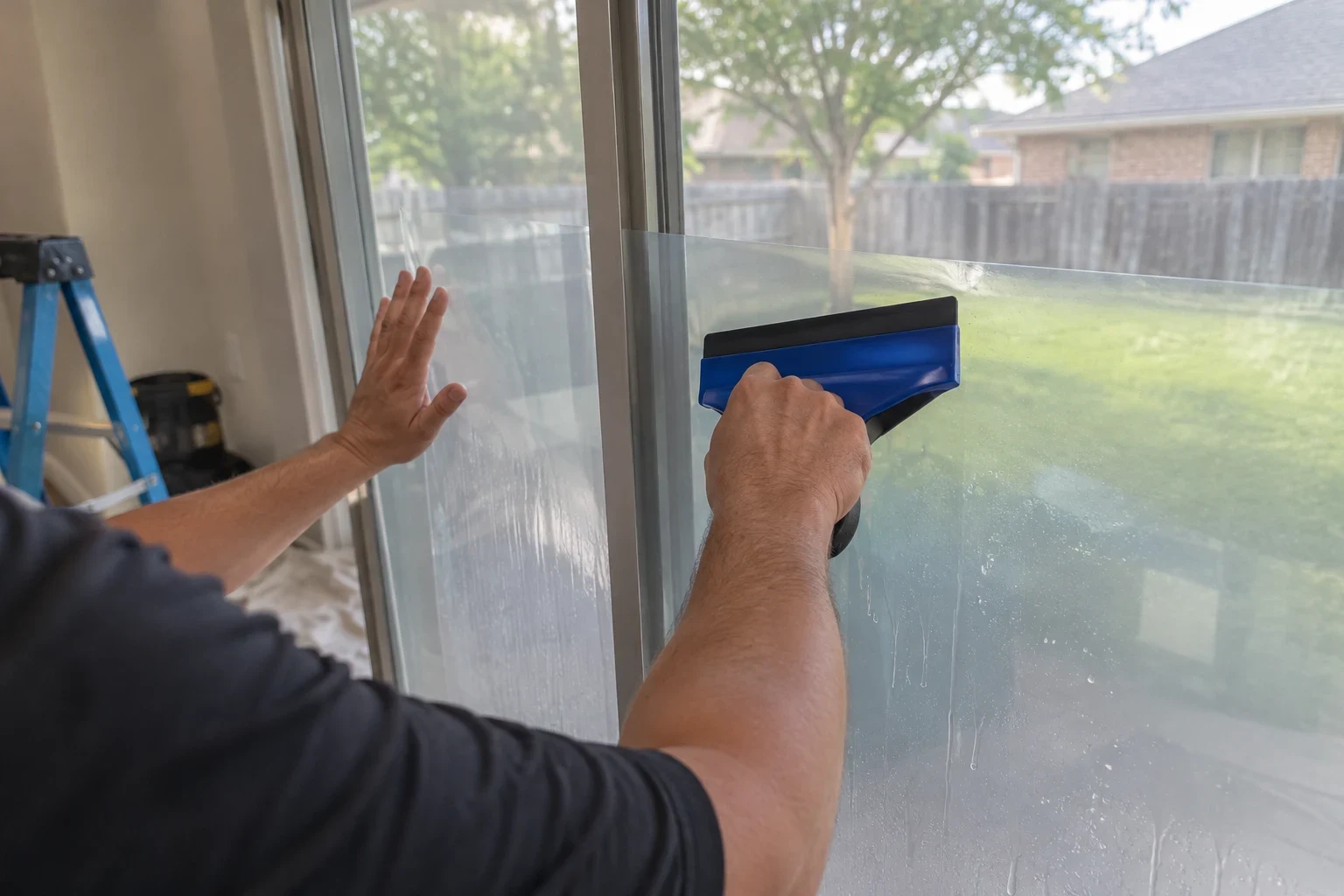
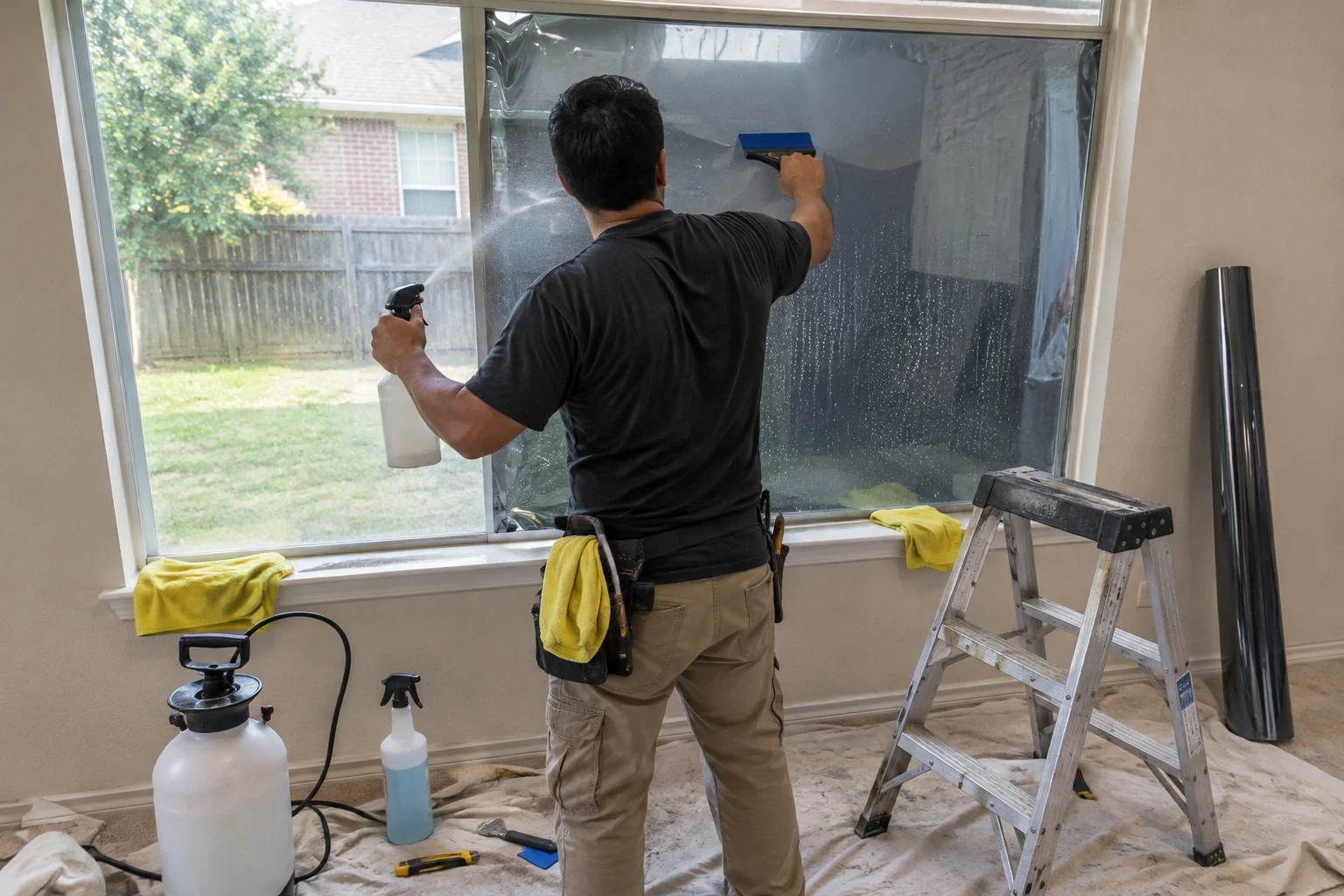
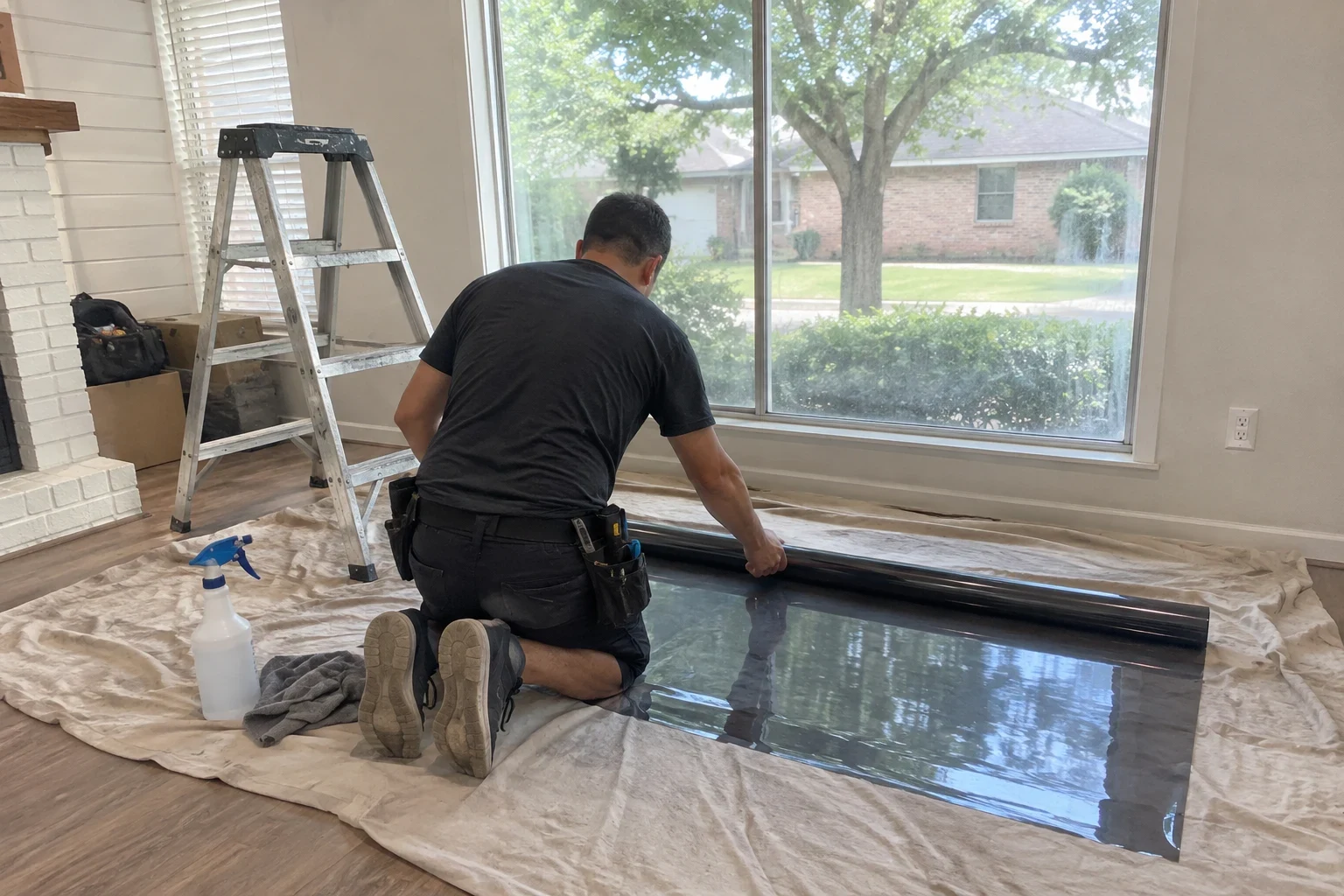
Glass is scraped and cleaned, and gaskets are detailed so no grit ends up under the film. Each piece is cut with a small edge gap so it does not lift at the frame, then the slip solution is squeegeed out.
Protection and cleanup
Towels and drop cloths go under every window we work on. Furniture near the glass is moved and put back, and we take the liners and trimmings with us.
Signs non-reflective film fits your home
- One room never matches the thermostat
- A sunroom or west-facing bedroom that stays several degrees warmer in the afternoon is usually taking on solar heat through the glass. Infrared-rejecting film targets that cause directly.
- Mirrored glass is off the table
- Your HOA rules, or simply your taste, rule out a shiny exterior. Non-reflective film keeps the facade looking the way it does now.
- Glare on screens, but you want the view
- Light-to-medium shades cut glare on TVs and monitors without the dark, tinted look that makes a room feel closed in.
- Fading near the windows
- Faded hardwood, rugs or upholstery points to UV exposure. Quality films block nearly all ultraviolet radiation, one of the main causes of fading.
- Old film bubbling or turning purple
- Purple color shift and bubbles mean the dyes and adhesive in an older film have broken down. We remove it, clean off the residue and apply a stable ceramic or carbon film in its place.
From the first call to install day
- 1
Free consultation by phone
Tell us which rooms run hot, where glare bothers you and how you want the glass to look. We ask about window age and type, then set a time to see the windows in person.
- 2
Measure and sample
We measure every pane, confirm the glass type and put samples up so you can compare shades side by side.
- 3
Written quote
You get a quote that lists each window, the film chosen for it and any old film removal, so nothing is bundled into a single vague number.
- 4
Installation
We prep each pane, lay down the film and finish the edges. A few rooms are often done in one visit, and you can stay home and use the rest of the house while we work.
- 5
Curing
While trapped moisture works its way out, the film may look a little cloudy or show small water pockets, usually for several days and sometimes a few weeks, clearing faster in strong sun. Leave the filmed side alone for roughly a month. After that, wipe it gently with a microfiber cloth and a cleaner that contains no ammonia, since ammonia can attack the film's surface.
What sets the price
Non-reflective film is priced mainly by the square footage of glass and the film you choose, plus the labor each window needs. We give you a written quote after measuring, with each window listed. We do not post figures here because two homes with the same window count can differ a lot in glass area and access.
- Film construction
- Nano-ceramic films cost more than carbon or dyed films but usually reject more infrared heat at the same shade and hold their color longer.
- Glass area and pane size
- Total square footage drives material cost. Very large panes may need wider rolls or a seam, which adds handling time.
- Access
- Second-story windows, transoms above doors and glass behind built-ins need ladders or extra setup.
- Removing old film
- Stripping failed film and its adhesive is slow, careful work, and it is quoted as its own line.
- Glass type
- Dual-pane or low-E glass can narrow the choice to specific compatible films, which affects which products and price points are available.
Non-reflective film questions
- Will non-reflective film make my rooms darker?
- Only as much as you choose. Films come in a range of visible light transmission, and high-transmission ceramic films can look nearly clear while still rejecting a useful share of infrared heat. Darker shades add more glare reduction. The samples help you settle on the right balance.
- Does it cut heat as well as reflective film?
- At the same shade, a metalized reflective film usually rejects more total solar energy. Non-reflective film trades some of that for appearance, and ceramic film closes much of the gap. We show you the spec sheets side by side, including total solar energy rejected, visible light transmission and reflectance, so you can compare real numbers.
- Will the film interfere with my cell signal or Wi-Fi?
- Ceramic and carbon films contain no metal layer, so they do not block phone or wireless signals the way some metalized films can. That is one reason people choose them for homes with a lot of glass.
- Can people see in at night?
- Yes, when your lights are on and it is dark outside, as with any window film. Light flows toward the darker side, so you will still want blinds or shades for nighttime privacy.
- Can it affect my window manufacturer's warranty?
- Some window makers limit their warranty when aftermarket film is applied. It is worth checking your window paperwork, and we check the film maker's compatibility guidance for your glass before recommending anything.
- How much will it lower my energy bills?
- That depends on how much direct sun reaches your glass, how many windows get film and how efficient your system is. The biggest difference usually comes from unshaded east and west windows. We will not quote you a savings percentage we cannot back up for your house.
Talk through your windows with us
Tell us which rooms run hot and how you want the glass to look. We will explain which non-reflective films suit your windows and what the job involves.