ServicesOffice Window Tinting
Office Window Tinting in Dickinson
We install window film that stops the glare washing out your screens and the heat building up at desks near the glass. We measure each pane, match the film to how the room is used, and work room by room so your staff keeps working.
What office window film fixes
Office glass lets in three things you pay for: visible light, infrared heat and ultraviolet. Untreated, a west-facing window lets most of the infrared through, so the desks along it run several degrees warmer than the rest of the floor and the HVAC system works harder to pull that zone down. Film applied to the inside of the glass reflects or absorbs a share of that energy before it reaches the room.
The right film depends on the problem. Screen glare is a visible light transmission (VLT) question. Heat is about total solar energy rejected (TSER) and the infrared figure. A film can be fairly light and still reject a lot of heat, which matters in an office where people need daylight to work. We read those numbers with you instead of picking the darkest roll on the truck.
For a single suite or a small office, this page covers it. For whole storefronts or larger buildings, see Commercial Window Tinting.
What the work includes
- 01
Glass and exposure survey
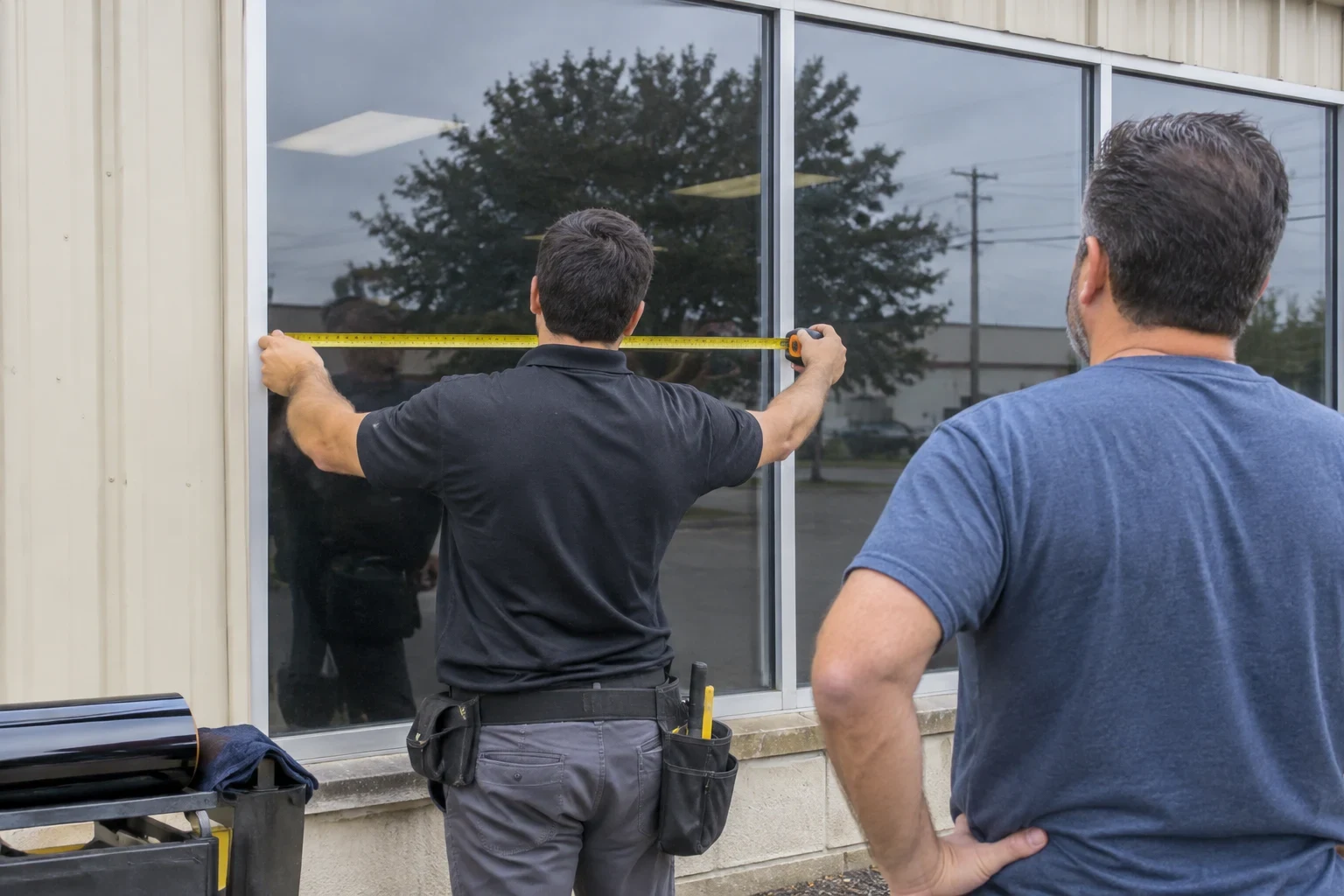
We note which walls face west and south, measure every pane and check the glass type. Insulated units and glass with a low-E coating can only take certain films without added thermal stress, so we confirm the glass before we quote.
- 02
Film matched to the room
Conference rooms with displays often need stronger glare reduction. Open work areas usually want more daylight with high heat rejection. Depending on the space, we may recommend Ceramic Window Film, Reflective Window Film or Non-Reflective Window Film.
- 03
Glass prep
Each pane is scraped with a razor blade and cleaned, including the gasket edges. Dust or paint specks left under film show as bubbles later, so this step takes real time.
- 04
Precision install
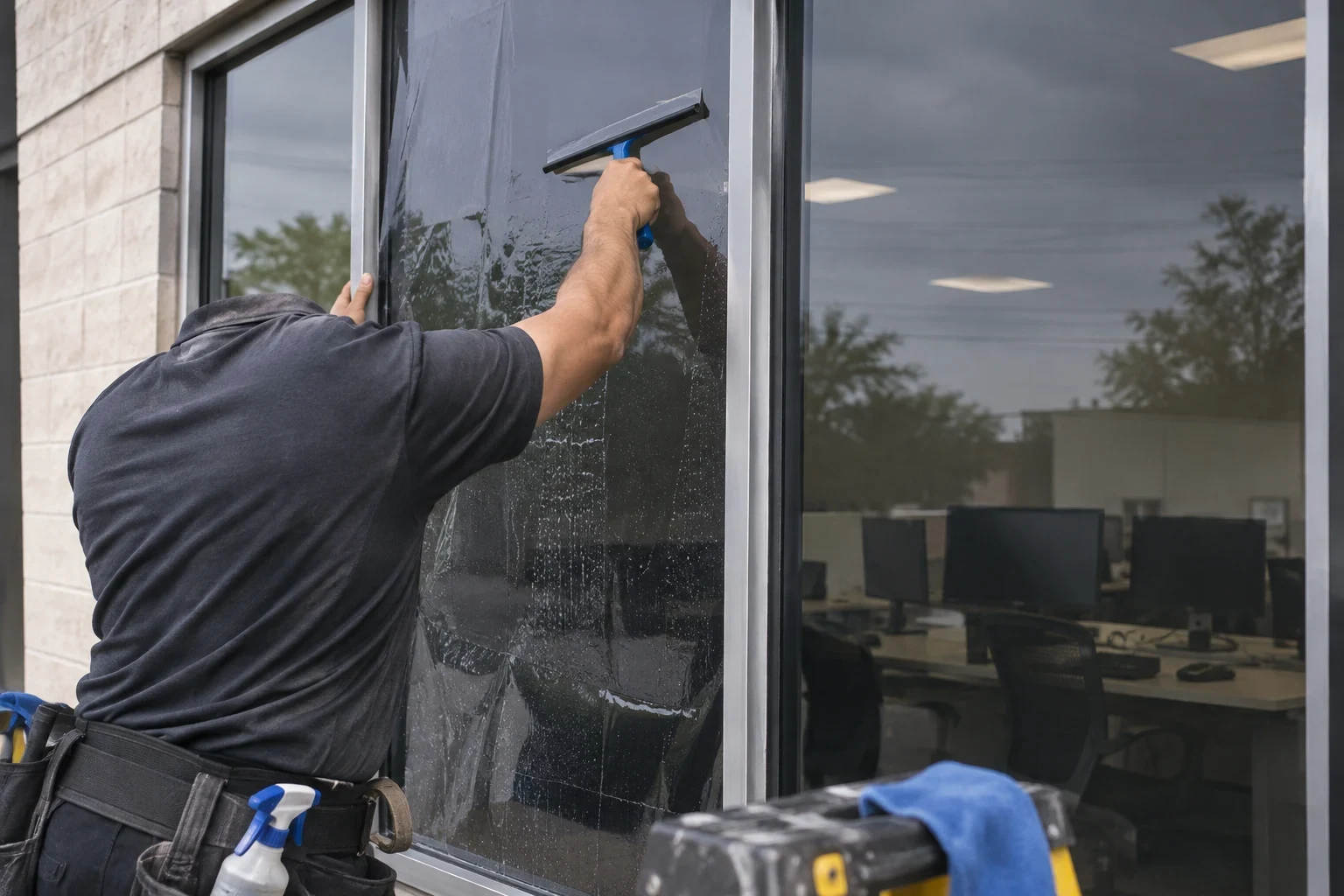
Film is laid on with a slip solution, squeegeed out and trimmed to leave a small, even gap at the frame so the edges do not lift.
- 05
Furniture and floor protection
We move what needs moving away from the sills, cover desks and electronics near the glass, and put everything back.
- 06
Walkthrough and care notes
We walk each room with you and explain the curing period and how to clean the film without scratching it.
Questions about Office Window Tinting?
Call(281) 378-5740Signs your office needs window film
Staff tilt or move monitors
When people angle screens away from windows or keep blinds shut all day, the glass is letting in more visible light than the room can handle.
One side of the office runs hot
A thermostat fight between the window side and the interior usually means solar heat gain through the glass, not a broken HVAC unit.
Faded furniture and files
Bleached chair fabric, carpet and paper near the windows point to UV exposure. Most quality films block nearly all UV.
Afternoon cooling bills climb
Long Gulf Coast summers put a steady load on rooftop units. If cooling costs spike when the sun moves to the west wall, film targets the source.
Blinds that never open
Closed blinds block glare but also block daylight, so lights stay on. Film lets you raise them.
How an office install runs
- 1
Free consultation by phone
You describe the space and the problems. We set a time to see the glass in person.
- 2
On-site measure and samples
We measure, confirm which films the glass can take, and press sample swatches onto your own panes. Standing at a desk, you can judge the shade and how much the glare drops before choosing.
- 3
Line-item quote
You get a written quote listing each room, pane count and film type, so you can approve the whole office or just the worst rooms first.
- 4
Install around your schedule
We work one room or zone at a time so most of the office stays in use. Talk to us about evening or weekend timing if a room cannot be cleared during the day.
- 5
Curing and check
Light haze or small water pockets are normal for a few weeks as the moisture under the film evaporates. We tell you what to expect and look at anything that does not clear.
What moves the price
Office film is priced by the glass, not by the room, and the film you choose has the largest effect after size. We show you each line so you can see where the money goes. Your free quote covers the following.
- Total square footage
- More panes and larger panes mean more film and more labor. Many small divided lites take longer per foot than one large pane.
- Film type
- Ceramic films with high heat rejection and low reflectivity cost more than standard dyed or metallic films.
- Access and height
- Tall clerestory glass, panes above built-in furniture or windows needing a ladder or lift add setup time.
- Old film removal
- Peeling or purple film has to be steamed off and the adhesive scraped away before new film goes on.
- Scheduling
- Splitting the job into several visits to keep rooms open adds some time compared with doing the floor at once.
Office window tinting questions
Can we keep working while you install?
Yes, in most offices. We clear one zone at a time, and the noise is limited to scraping and squeegeeing. Staff at those desks usually need to step away for a short stretch while their windows are done.
Will film make the office feel dark?
Not if it is chosen for daylight. Many films reject a large share of heat while keeping most visible light. We show samples on your glass so you can judge the brightness before you commit.
Can film crack our dual-pane windows?
A film that absorbs too much heat can raise thermal stress on some insulated glass. That is why we check the glass type and use films rated for it. On sensitive units we steer toward lower-absorption options.
Will it actually lower our energy bill?
It reduces solar heat entering through the glass, which reduces the cooling load on those zones. How much you save depends on how much glass faces the sun and how hard your system was working. We will not quote you a savings number we cannot back up.
We lease our space. Do we need approval?
Often yes. Many building owners control how the exterior looks, so reflective film may need sign-off. We can give you the film specs to pass to your landlord, or suggest a non-reflective option that changes the exterior less.
What if we also want privacy for one room?
Frosted or high-privacy film can go on a single conference room or office while the rest gets clear heat-control film. See Privacy Window Tinting and Decorative Window Tinting for the options.
Get cooler desks and clearer screens
Tell us which rooms are giving you trouble. We will look at the glass, show you samples and give you a line-item quote with no obligation.