ServicesPrivacy Window Tinting
Privacy Window Tinting in Dickinson
We install privacy window film that stops people from seeing into your rooms while daylight still comes through. Mirrored films for daytime privacy and heat rejection, frosted films for bathrooms and doors that need cover after dark. We match the film to each window, not one roll for the whole house.
How privacy film actually works
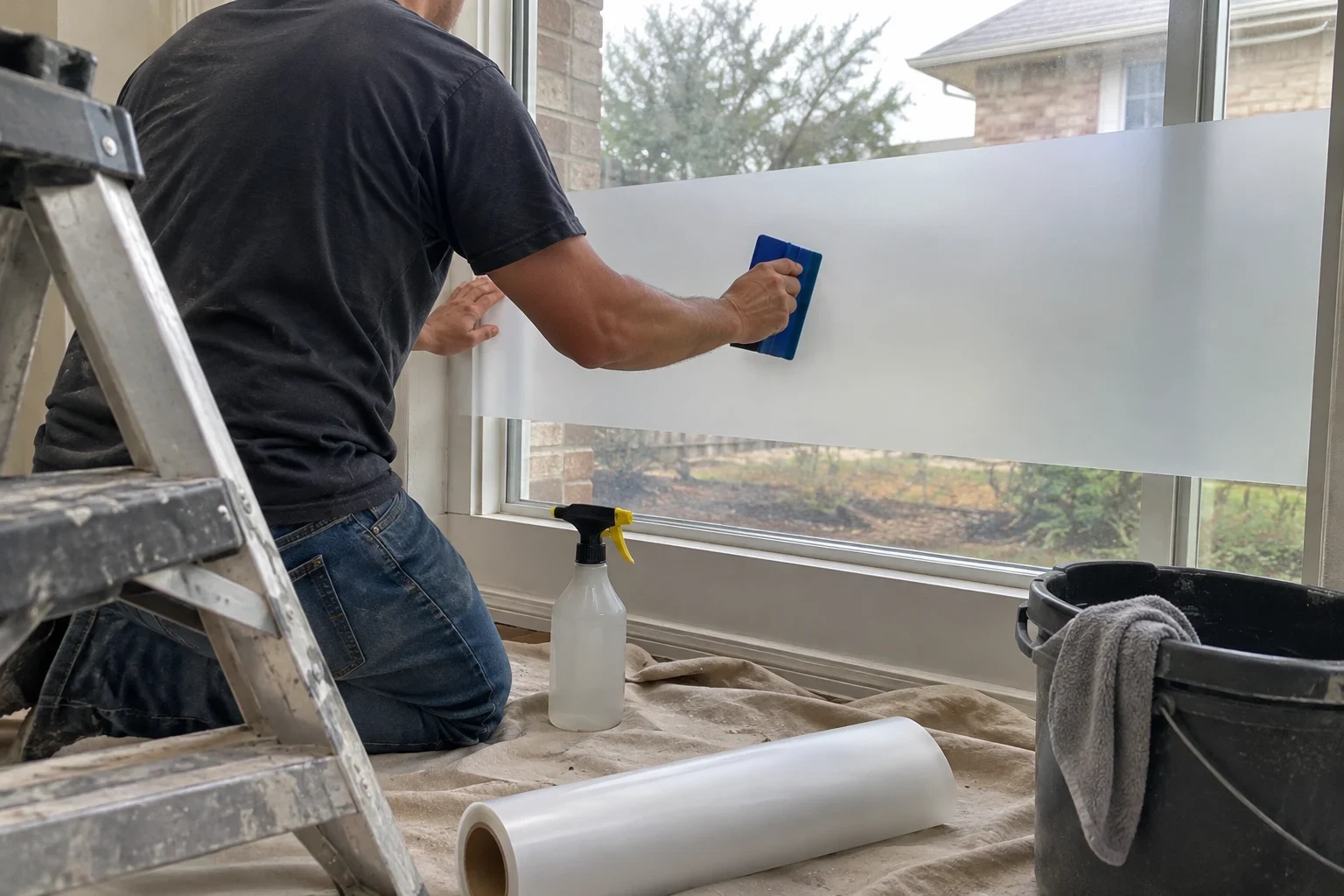
Privacy window tinting is a polyester film applied to the inside surface of your glass. We work with two families of film. Reflective films carry a thin metalized layer that turns the outside face into a mirror in daylight. Frosted and opaque films diffuse light so shapes blur in both directions, day and night.
The right choice depends on when you need privacy. Reflective film works on a light difference: whichever side is brighter sees its own reflection. On a sunny afternoon your street sees a mirror. After dark with lamps on inside, the effect reverses and people can see in. For bathrooms, sidelights and bedrooms you use at night, frosted film or a reflective film paired with blinds is the straight answer, and we will tell you that up front.
Reflective privacy films also bounce back a large share of solar heat before it passes through the glass, so a west-facing front room stays cooler and the air conditioner runs shorter cycles. Frosted films give you privacy and UV protection but only modest heat rejection, so we point the reflective films at the windows where the energy savings are real.
What the work includes
- 01
A film choice for each window
We look at what each room needs: daytime screening, all-hours cover or glare reduction. A street-facing living room and a bathroom over the tub rarely get the same film.
- 02
Dual-reflective film for rooms you look out of
Dual-reflective film has a bright mirrored outer face and a darker, low-reflectance inner face. You keep a clear view out on overcast days and in the evening without staring at your own reflection in the glass.
- 03
Frosted and gradient film for bathrooms and doors
Frosted film blocks the view at every hour while letting soft light in. Gradient patterns can stay clear at the top and solid at eye level, which works well on front door sidelights and shower windows.
- 04
A glass check before any film goes on
Darker, more absorptive films raise the temperature of the glass. On large dual-pane, low-e or tempered units, that thermal stress matters, so we confirm the film is suited to the glass type before we recommend it.
- 05
Clean install and tidy edges
We trim the film just short of the frame gasket so the mounting solution can escape while it cures. Sills and floors are covered, and we clear our scraps and wipe down before we leave.
Questions about Privacy Window Tinting?
Call(281) 378-5740Signs privacy film is the right fix
Blinds closed all day
If you keep blinds shut to stop people looking in, you are paying for electric light in daytime. Reflective film lets you open them and keep the screening.
A neighbor's window lines up with yours
Houses built close together often have windows that face each other across a side yard. A frosted or reflective film breaks that sightline without heavy curtains.
Clear glass in the bathroom
Plain glass over a tub or toilet needs cover at night too. This is a job for frosted film, not a mirrored one.
Sidelights and glass front doors
Clear glass beside the front door shows visitors straight into your hall. Gradient or frosted film keeps the light and hides the view.
A hot, bright front room
If the same window that exposes your living room also bakes it each afternoon, a reflective film handles privacy and heat rejection in one layer.
How a privacy film job runs
- 1
Phone consultation
Tell us which rooms bother you, when you need privacy and which windows get afternoon sun. That is enough to narrow the film options before we visit.
- 2
Measure and samples at your windows
We measure each pane, check the glass type and hold sample pieces against your actual windows so you can see the effect from inside and out. You get a written quote for the windows you choose.
- 3
Installation
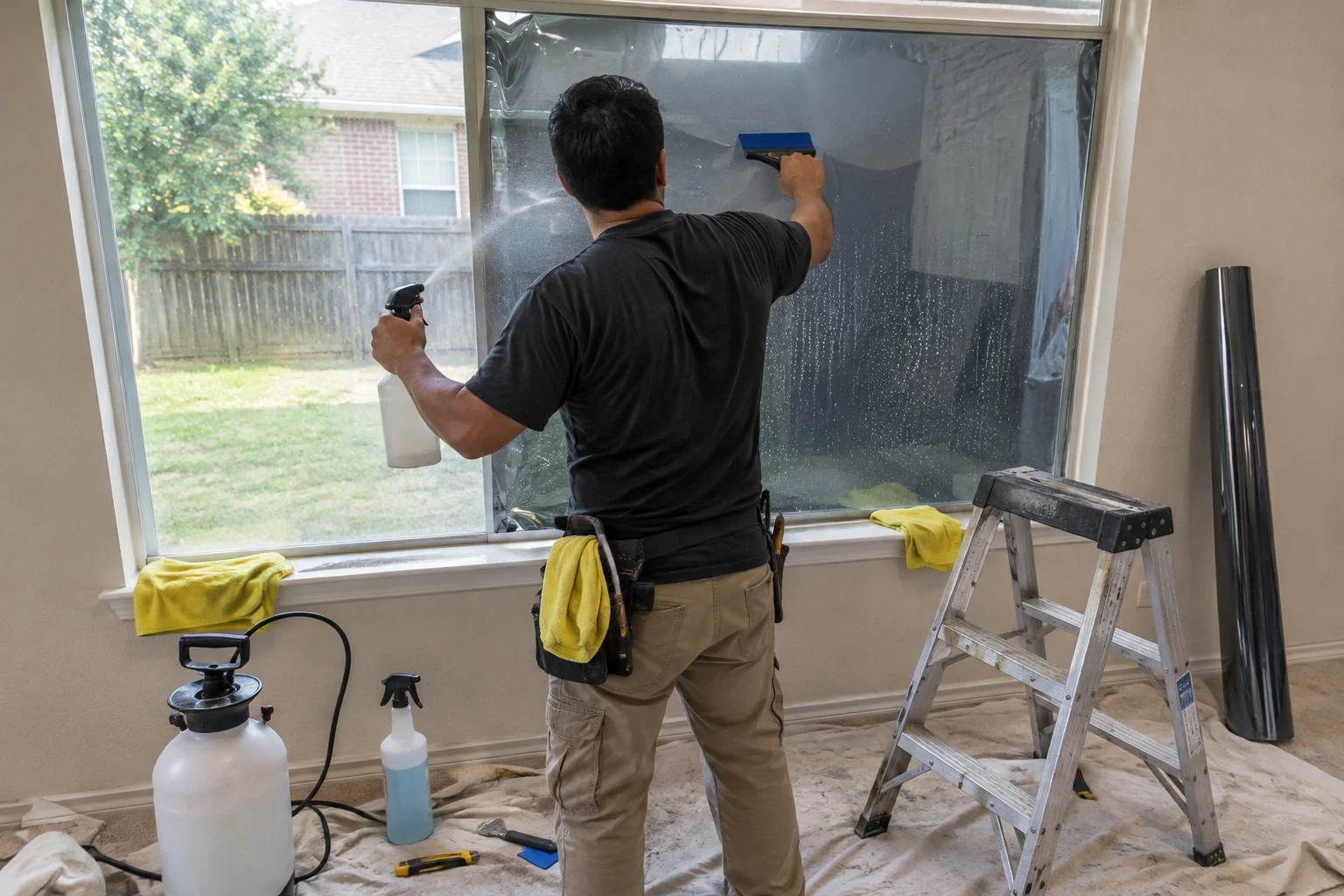
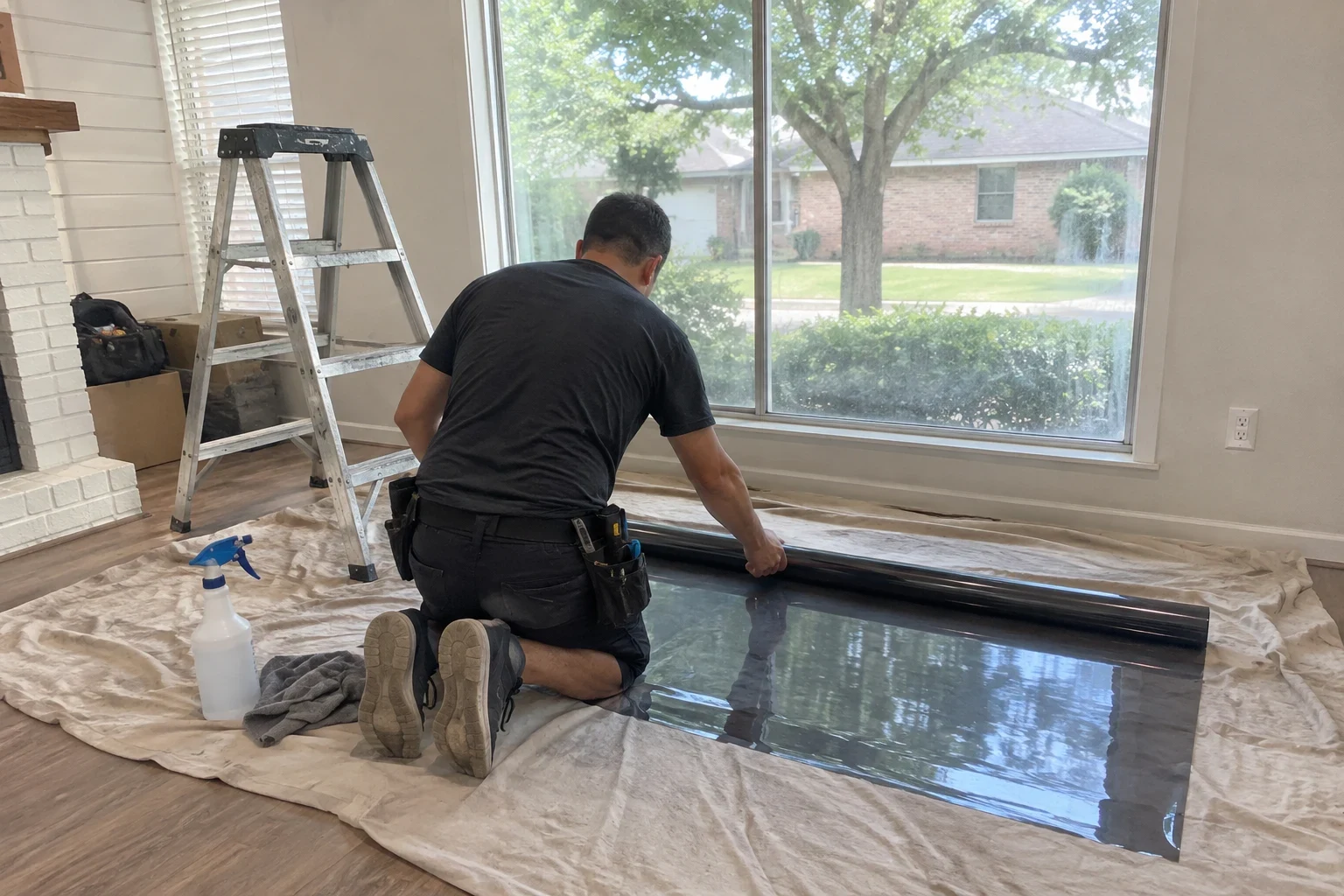
We protect the floor, scrape the glass with a blade to remove grit and paint flecks, and clean the gaskets. The film goes on with a slip solution, gets squeegeed flat and trimmed to each pane.
- 4
Curing
A slight haze or small water pockets are normal while the mounting solution evaporates, from a few days to a few weeks depending on the film and sun exposure. We tell you how long to wait before washing the glass.
What moves the price
Privacy film is priced by the window and by the film. Your quote lists each window, the film chosen for it and the work involved, so you can drop or add panes and see the change. We give it in writing after we measure.
- Film type
- Standard frosted film usually costs less than dual-reflective or decorative gradient patterns. Higher heat rejection films sit at the upper end.
- Glass area and pane count
- Total square footage drives material, and many small divided panes take more labor than one large pane of the same area.
- Access and window shape
- Tall transoms, arched tops and windows behind built-ins need ladders, templates or extra trimming time.
- Removing old film
- Failed film that is peeling or bubbling has to come off, along with its adhesive, before new film can bond. Older film can take longer to strip.
Privacy window tinting questions
Can people see in at night with mirrored film?
They can after sunset if your lamps are on, because the room becomes the brighter side of the glass. Reflective film depends on the outside being lighter than the inside, so the mirror effect flips in the evening. For privacy after dark we use frosted film, or we pair reflective film with blinds you close at night.
Will privacy film make my rooms dark?
It comes down to the film's visible light transmission, the percentage of daylight it lets through. Many reflective privacy films still pass a good share of daylight, and frosted film keeps a room bright while blurring the view. We hold samples against your own windows so you can judge the light before you decide.
Is privacy film safe on double-pane windows?
In most cases, as long as the film suits the glass. Dark absorptive films can heat large dual-pane units enough to cause stress cracks at the edges. We check the glass type first and only recommend a film rated for it.
Can I still see out?
With reflective and dual-reflective film, yes, and the view is clear in daytime. Frosted film blocks sight in both directions, which is what you want in a bathroom. Gradient patterns let you keep a clear band at the top of the glass.
Does privacy film lower energy bills?
Reflective films turn back a large share of solar heat at the glass, so sunny rooms stay cooler and the air conditioner runs less in summer. Frosted films give less heat rejection. If cutting heat matters more than screening the view, our ceramic window film page covers a clearer option.
Can the film be removed later?
Yes. The film peels away from the glass, and any adhesive left behind is cleaned off. That makes it a sensible choice for rooms you may use differently in a few years.
Pick the right privacy film for each room
Tell us which windows you want covered and when. We will bring samples, check your glass and give you a written quote.