ServicesSecurity Window Film
Security Window Film in Dickinson, TX
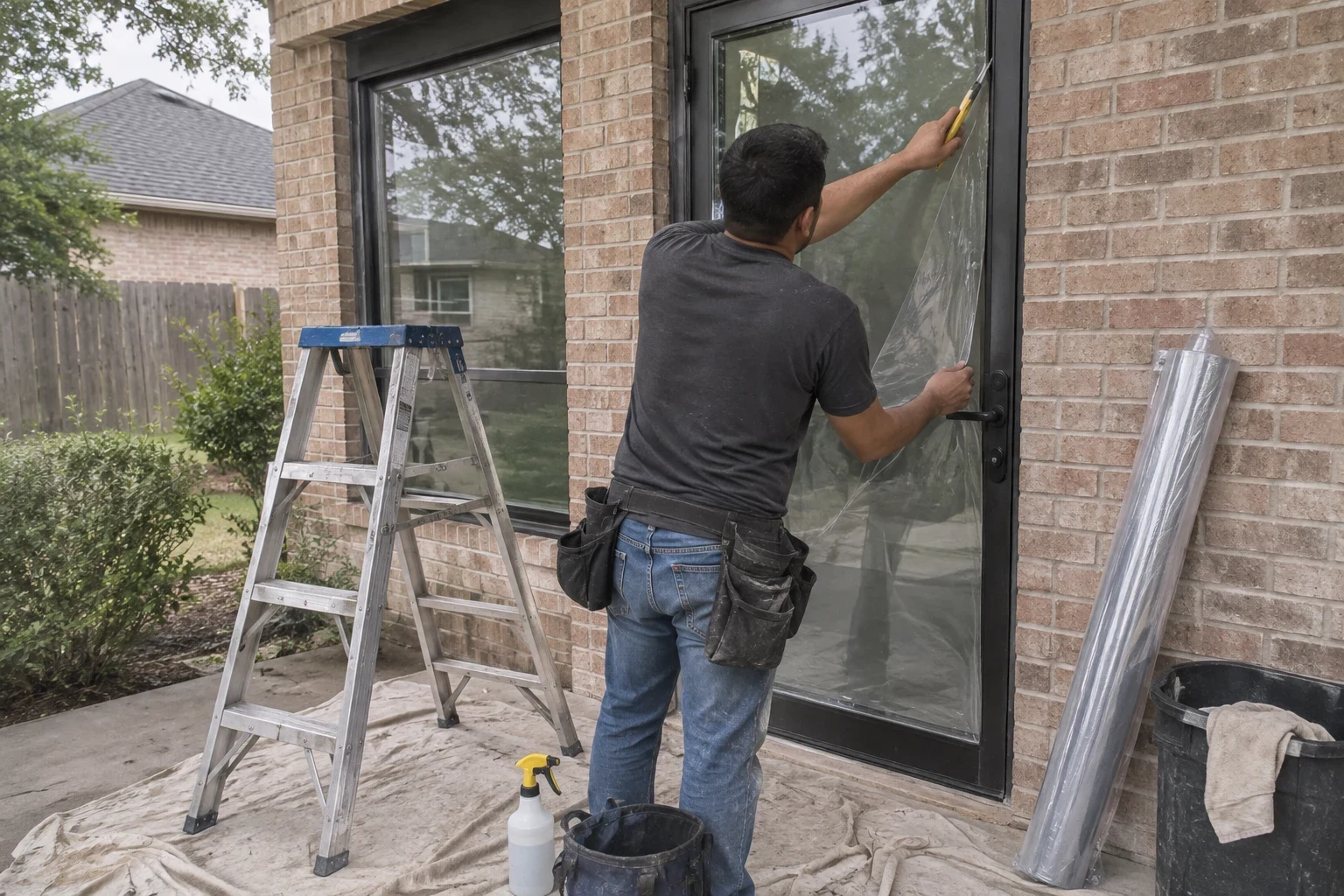
We install thick polyester security film on the inside of your glass. When the pane breaks, the shards stay stuck to the film and in the frame. That slows a forced entry and keeps loose glass off your floors. We can also add heat rejection when you want cooler rooms.
What security film does and what it does not do
Security film is a laminate of several polyester layers held to the glass with an aggressive pressure-sensitive adhesive. Standard solar film runs about 2 mil thick. Security film runs from roughly 4 mil to 14 mil. The extra thickness does not make glass unbreakable. It changes how glass fails. Instead of falling out in pieces, a struck pane cracks into a web that stays stuck to the film, so anyone forcing entry has to keep hitting the same spot. That takes time and makes noise.
We are straight about the limits. Film is not bulletproof, and on its own it does not turn a window into a storm-rated opening. What it does well is buy time, contain shards and protect the people inside from flying glass. It also blocks most UV light, which slows fading on floors and furniture.
If cooler rooms are on your list, we can use a tinted security film that adds heat rejection to the same layer. Keeping solar heat out of west-facing rooms during a long Gulf Coast summer lets your AC run less.
What the job includes
Glass and frame check
We confirm whether each pane is annealed, tempered or dual-pane, and look at the condition of the seals and frames. Some glass types limit which films are safe to use, and we tell you before anything goes on.
Film thickness matched to the opening
A ground-floor sliding door or a sidelight next to a deadbolt usually gets a heavier film than an upstairs window. We explain the thickness we recommend for each opening and why.
Edge-to-edge installation
Film is trimmed to leave a hairline gap of about a sixteenth of an inch at the edges, so the glass can move with temperature changes without lifting the film.
Optional attachment system
For openings that need more strength, we can anchor the film to the frame with a structural silicone bead. That ties the glass to the frame so the whole pane is harder to push in.
Protection and cleanup
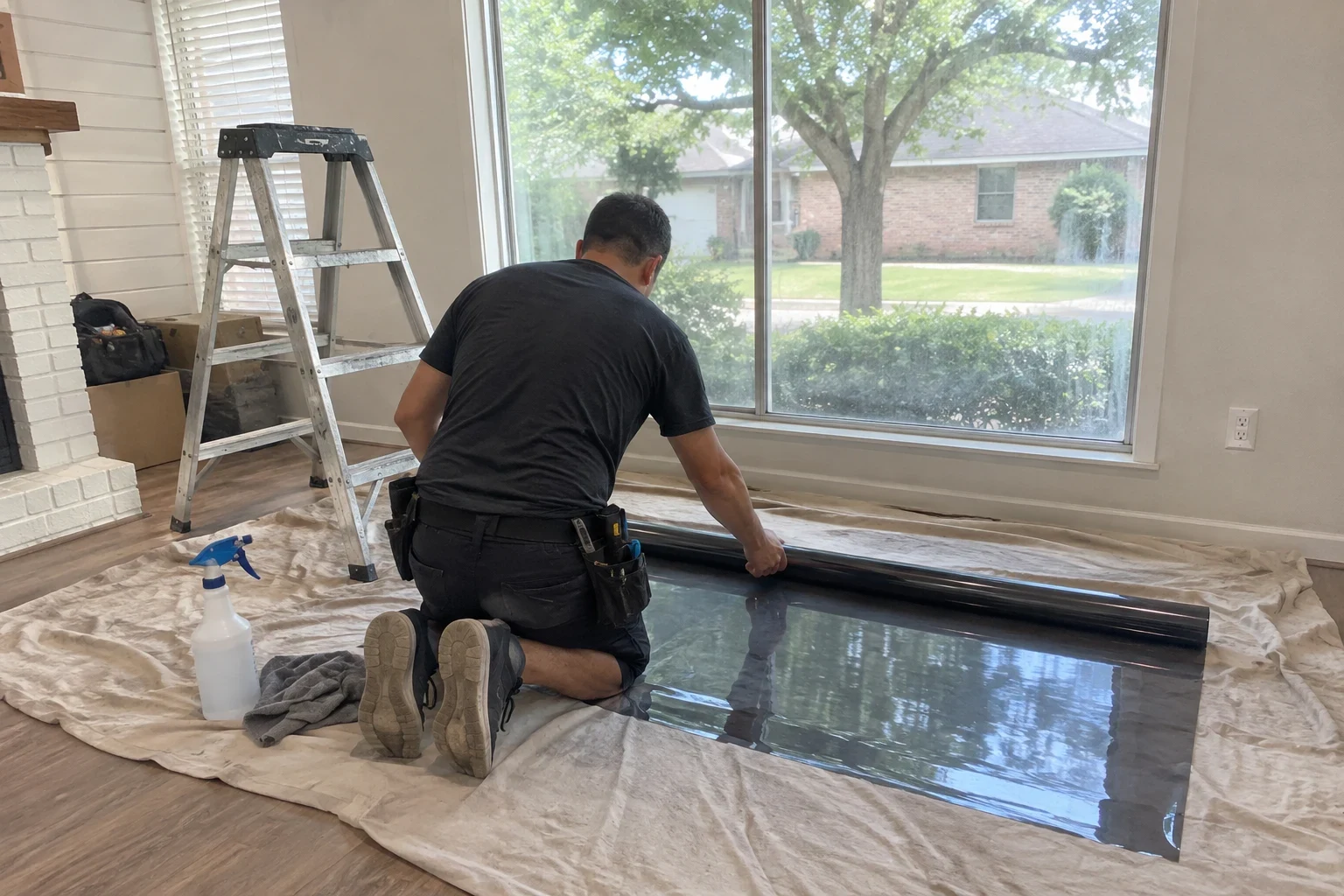
We lay down drop cloths, move what is in the way and wipe down sills and tracks when we finish. Old film comes off first if there is any on the glass.
Signs security film makes sense for your home
Glass next to a lock
Sidelights and door glass within reach of a deadbolt are the easiest way in. Film makes breaking a hand-sized hole slow and loud.
Large sliding glass doors
Big panes facing a back yard are out of view from the street. Film helps them hold together when struck.
Kids or pets near low glass
Annealed glass breaks into long, sharp pieces. Film holds those pieces in place if a ball or a fall cracks the pane.
Storm debris worries
Wind-driven debris can shatter glass into a room. Film reduces flying shards, though it does not replace shutters or impact-rated windows.
Fading floors and furniture
Security films block most UV, so you get slower fading along with the added strength.
How an install day runs
- 1
Consultation by phone
You tell us which windows and doors concern you. We ask about glass size and type, and set a time to measure and look at the openings in person.
- 2
Clean and prep the glass
We scrape the glass with a razor blade and wash it with a slip solution. Any dust or paint left behind would show as a bubble under thick film.
- 3
Apply and squeegee
The film is laid wet, positioned, then squeegeed hard to push the water out from the center to the edges. Thicker films take more pressure and more passes.
- 4
Anchor and cure
If you chose an attachment system, the silicone bead goes on and sets. Early on, thick film may look slightly milky or hold tiny pockets of trapped moisture, sometimes for several weeks. That leftover water is slowly escaping through the film, and the view sharpens as it dries with no help from you.
What moves the price
Security film is priced by the opening, not by the house. The biggest drivers are how thick the film is and whether it is anchored to the frame. We walk through each choice on the phone and give you a free quote before any work is scheduled.
- Film thickness
- A 14 mil film costs more and takes longer to install than a 4 or 7 mil film. We match the thickness to the risk at each opening rather than putting the heaviest film everywhere.
- Attachment system
- Anchoring film to the frame adds material and labor. It is worth it on vulnerable doors and less so on small upstairs panes.
- Glass size and access
- Tall panes, transoms and glass above stairs need ladders or extra hands, and oversized panes may need seamed film.
- Clear versus tinted film
- Adding a solar control layer for heat rejection changes the film cost. On sunny exposures, it can pay back in lower cooling bills.
- Old film removal
- Stripping aged, baked-on film and adhesive adds time before the new film can go on.
Security window film questions
Something not covered here? (281) 378-5740
Will security film stop someone from breaking in?
No film turns glass into a wall. What it changes is how the pane fails: the cracked glass stays bonded to the film and in the frame, so an intruder has to strike the same spot again and again to open a gap. That costs time and makes noise, which is often enough to send someone away or give an alarm time to work.
Does it make my windows hurricane-proof?
It does not, and we will tell you that up front. Film keeps broken glass together and reduces shards flying into the room, but shutters, storm panels and impact-rated windows do a different job that film cannot replace. Treat it as one extra layer alongside those.
Can security film also keep my rooms cooler?
It can, when you pick a tinted or solar control security film. That version turns back part of the sun's heat at the glass, so rooms that heat up in the afternoon stay more comfortable and your AC cycles less. A clear security film is mostly about strength and UV blocking, with little effect on heat.
Is it safe for dual-pane windows?
In most cases yes, but the answer depends on the glass and the film. Darker films soak up more solar heat, and on some annealed dual-pane units that extra heat raises thermal stress on the glass. We identify the glass type before we recommend anything and choose a film that fits it.
When can I clean the windows?
Leave the filmed side alone for about 30 days while the adhesive cures. After that, wipe it with a microfiber cloth and a mild cleaner that contains no ammonia. Razor blades, scrapers and scrub pads should never touch the film, because they can scratch its protective top coat.
Find out which openings need it most
Tell us about the doors and windows that worry you. We will explain the film thickness and anchoring that fit each one and give you a clear quote with no obligation.